Biological Aortic Valve Replacement. Long-Term Follow-Up and Predictors of Mortality, Rehospitalization and Reintervention
pp 266-271
DOI:
https://doi.org/10.7775/Keywords:
Aortic Valve, Heart Valve Prosthesis, PrognosisAbstract
Background
Aortic valve replacement is the conventional procedure in aortic valve disease; nevertheless, choosing the most suitable model of prosthesis is a complex decision. The use of novel biological models specially treated to reduce long-term structural deterioration has been encouraged, even in young populations.
Objective
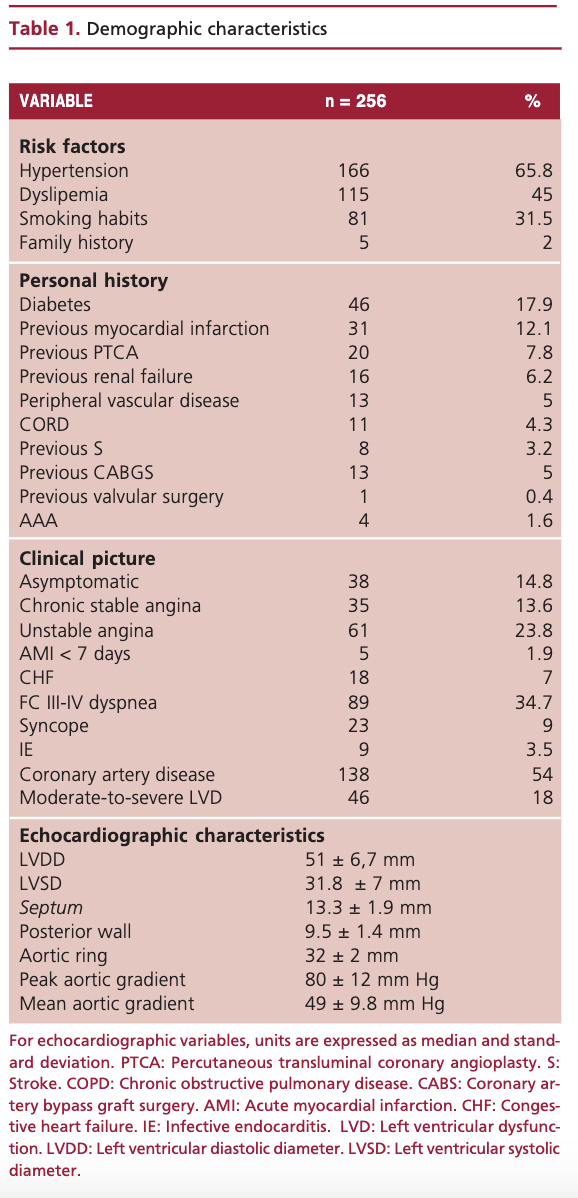
To assess long-term survival of biological valve replacement, quality of life, rates of re-admission and reintervention and to identify predictors of those events. We analyzed a population of patients who had undergone aortic valve replacement with bioprosthesis, alone or combined with revascularization, between June 1996 and December 2005. Excluding those who were dead within 30 days after surgery, 256 patients were included, and 94.2% completed follow-up at 1158 days.
Results
Overall survival was 94.8%, 88.6%, 85% and 82.4% at 1, 3, 5 and 7 years, respectively; and 97.2%, 94.6%, 91.2% and 89.4%, respectively, excluding cardiovascular deaths. Freedom from readmission was 86%, 75.7%, 70.6% and 65.9% for the same period. Freedom from reintervention was 97.4%, 95.2%, 92.1% and 92.1% at 1, 3, 5 and 7 years. Non-sinus rhythm was identified as a predictor for mortality (OR 3.4; p = 0.012) and carotid disease (OR 7.6; p = 0.002), COPD (OR 7; p = 0,004 and male gender (OR 2.18; p = 0.039) were recognized as predictors for readmission. Predictors for reintervention were not identified due to the low incidence of this endpoint.
Conclusions
Long-term survival is acceptable for the age group and non-sinus rhythm, the only predictor of mortality identified. Readmission rate at one year is high and male gender, carotid stenosis, history of respiratory and cerebrovascular diseases and non-elective surgery are predictors for this outcome. Reintervention rate during follow-up is low, encouraging the indication of this type of prosthesis.
Downloads
Published
Issue
Section
License
Copyright (c) 2026 Argentine Journal of Cardiology

This work is licensed under a Creative Commons Attribution-NonCommercial-ShareAlike 4.0 International License.