
A Prospective Multi-Center Registry of Patients Hospitalized for Non ST Segment Elevation Acute Coronary Syndrome in High Complexity Centers. In-hospital and 6-month Outcomes (Buenos Aires I)
PP. 299-307
DOI:
https://doi.org/10.7775/rac.v88i4.669Keywords:
Acute coronary syndrome without ST segment elevation, myocardial infarction, coronary revascularizationAbstract
Background: Non-ST elevation acute coronary syndrome (NSTE-ACS) management has evolved over the past years, based on new pharmacological agents and progress in revascularization techniques. The aim of this study was to analyze the current management of NSTE-ACS in high complexity centers of the city of Buenos Aires and the province of Buenos Aires.
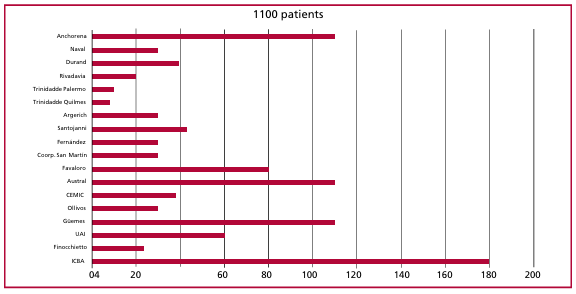
Methods: Patients hospitalized in 21 centers with coronary care unit, 24-hour catheterization lab availability and cardiovascular surgery were prospectively enrolled in the study and followed up for 6 months after hospital discharge.
Results: The registry included 1,100 consecutive patients: 61% corresponded to non-ST-segment elevation myocardial infarction and 37.4% were unstable angina. Mean age was 65.4 ± 11.5 years and 77.2% were men; 27.6% had diabetes mellitus and 31.5% previous myocardial infarction. An early invasive management was used in 86.7% of cases with a median time to coronary angiography of 18 hours (IQR 7-27.7). During hospitalization, 5.2% of the patients presented reinfarction, 0.3% stroke and overall mortality was 2.7%. The rate of bleeding events ≥ BARC type 2 was 10.1%. At 6-month follow-up, the rates of reinfarction, ACS and overall mortality
were 8.4%, 10.9% and 5.7%, respectively.
Conclusions: The registry demonstrated a predominantly invasive therapeutic approach in patients with NSTE-ACS treated in high complexity centers with low rates of in-hospital complications and during follow-up.
Downloads
Published
Issue
Section
License
Copyright (c) 2020 Argentine Journal of Cardiology

This work is licensed under a Creative Commons Attribution-NonCommercial-ShareAlike 4.0 International License.





