
Intrauterine Programming of Adult Disease: Identification of Cardinal Genes Associated with Hypertension, Obesity and Metabolic Syndrome
pp. 27-36
DOI:
https://doi.org/10.7775/rac.es.v89.i1.19666Keywords:
Computational Biology, Gene Ontology, Fetal Growth Retardation, Hypertension, Obesity, Metabolic syndromeAbstract
Background: Intrauterine growth restriction is an abnormal fetal development characterized by a fetal growth rate lower than the potential genetic growth for the gestational age. This condition represents a major burden for public health systems, as it increases short and long-term morbidity and mortality in the offspring, particularly because of its association with the development of cardiovascular and metabolic disease in adult life.
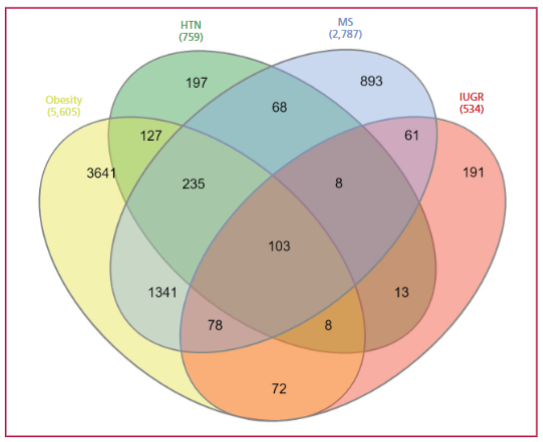
Objectives: The aim of the present study was to identify possible cardinal genes involved in intrauterine growth restriction associated with the development of obesity, hypertension and metabolic syndrome using bioinformatics tools.
Methods: A total of 343 genes involved in the phenotypes of interest were obtained and 20 genes were identified as significantly relevant in the interaction network analysis. Specifically, four of these identified genes encode for growth factors or their receptors, VEGFA, PDGFRB, IGF1R and EGFR. We also identified genes related to insulin and cardiovascular homeostasis as CTNNB1, APP, MYC and MDMD2. Cluster analysis provided the most significant gene ontology terms, including those related to the biological processes of proliferation and programmed cell death, intercellular communication, protein metabolism and development of the cardiovascular system.
Conclusions: The genes found in this study could be useful as putative biomarkers for the presence of cardiovascular and metabolic disorders associated with intrauterine growth restriction, or as potential therapeutic targets for treatment strategies directed to the patient's genotype.
Downloads
Published
Issue
Section
License
Copyright (c) 2025 Argentine Journal of Cardiology

This work is licensed under a Creative Commons Attribution-NonCommercial-ShareAlike 4.0 International License.





