Giant aneurysms of coronary arteries in Kawasakidisease: our casuistics
pp 206-209
DOI:
https://doi.org/10.7775/rac.v71i3.2915Keywords:
coronary aneurysms, Kawasaki, ischemia in childrenAbstract
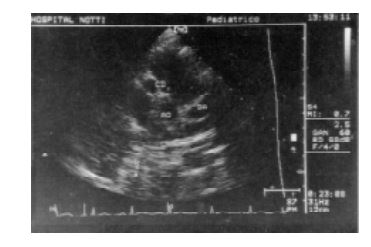
Kawasaki disease is an acute febrile entity of childhood, firstdescribed by Tomisaku Kawasaki in Japan in 1967. It is anacute vasculitis of unknown origin whose features are fe-ver, cutaneous rash, conjunctivitis, mucosal inflammation,cervical adenopathy and desquamation of hands and feetIt prevails in males and 80% of the affected children areyounger than 5 years.Long term effects of the disease depend on coronary lesions(aneurysms) that are the principal reason of its morbilityand mortality. We call giant aneurysms those which inter-nal diameter larger than 8 mm. Echocardiogram is the ba-sic diagnostic tool employed to evaluate the coronary ab-normalities and perform their follow-up.Echocardiographic scanning must include a systematicsearch looking for coronary ecstasies and/or aneurysms, bymeans of multiple scans and it must be performed by anexpert, because it is an operator-dependent technique.Patientís prognosis in the presence of giant aneurysms isdismal, due to their natural progression to coronary thrombosis or to severe obstructive injuries, producing myocardial ischemia including acute myocardial infarct in children and teenagers.We report the cases of 3 children suffering giant aneurysms of the coronary arteries as a result of Kawasaki disease, one of them required myocardial revascularization surgery due to severe obstructive injury.
Downloads
Published
Issue
Section
License
Copyright (c) 2026 Argentine Journal of Cardiology

This work is licensed under a Creative Commons Attribution-NonCommercial-ShareAlike 4.0 International License.