Sublingual Glyceril Trinitrate and Excercise Tolerance in Patients with Chest Pain
pp. 83-89
DOI:
https://doi.org/10.7775/rac.v70i2.2941Keywords:
Syndrome X, Nitrates, Exercise tolerance, Chest - pain andnormal coronariesAbstract
Objectives
To assess whether short-acting nitrates have deleterious effects on exercise test responses and/or daily life symptoms in patients with chest pain and normal coronary angiograms.
Background
The usefulness of nitrates in patients with chest pain and normal coronary angiograms is controversial. Whilst large observational studies suggest that nitrates are an effective therapy in approximately 50% of patients with chest pain and normal coronary angiograms, studies based on stress test responses suggest that this treatment may not only be ineffective but even deleterious. As a result of these reports, many of these patients are systematically denied the administration of nitrates.
Material and methods
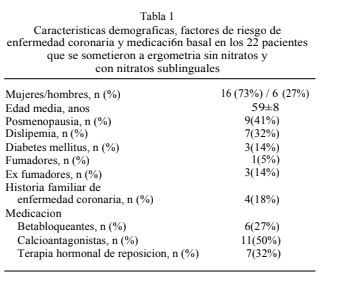
We studied 22 consecutive patients with typical exertional angina, positive exercise test responses and completely normal coronary angiograms. All patients underwent two treadmill exercise tests, the first without antianginal medications and the second 5 min after the administration of 400 pg of sublingual glyceryl trinitrate. These 22 patients and 55 other patients with chest pain and normal coronary angiograms, recruited during the same period, received treatment with sublingual glyceryl trinitrate (400 pg tablets) for one month as required for the relief of chest pain. All patients completed a standardized questionnaire regard-ing beneficial actions of sublingual nitrates on chest pain episodes during their daily activities and adverse effects of the drug.
Results
Compared to baseline, sublingual nitrate administration significantly increased both time to an-gina (p = 0.04) and time to 1 mm ST-segment depression (p = 0.03) during stress testing. Of the 77patients enrolled in the second part of the study51 (66%) found sublingual nitrates to be effective treatment for relief of chest pain which disappeared within 1-5 minutes. None of the patients reported exacerbation of chest pain associated with the administration of the drug. Fifteen patients(24%) discontinued sublingual nitrates because of side effects, mostly headache.
Conclusions
Sublingual nitrate improves exercise tolerance in a substantial proportion of patients with chest pain and normal coronary angiograms. These agents were not found to have deleterious effects on chest pain during follow-up.
Downloads
Published
Issue
Section
License
Copyright (c) 2026 Argentine Journal of Cardiology

This work is licensed under a Creative Commons Attribution-NonCommercial-ShareAlike 4.0 International License.