
Right Ventricular Outflow tract stenting in severe tetralogy of Fallot: an Option to the Blalock-taussig shunt
pp. 125-130
DOI:
https://doi.org/10.7775/rac.es.v87.i2.14669Keywords:
Tetralogy of Fallot –Stent - Right ventricular outflow tract - Blalock-Taussig anastomosisAbstract
Background: The initial management of patients with Tetralogy of Fallot (TOF) associated with unfavorable anatomy and significantly reduced pulmonary blood flow is controversial and still a clinical challenge.
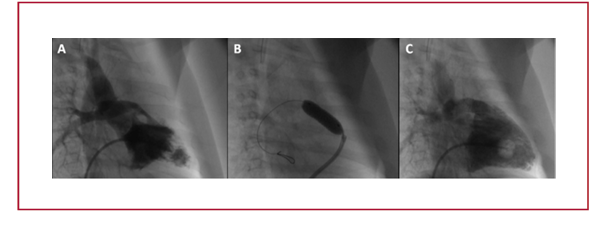
Methods: We conducted a multicenter, retrospective and observational study in consecutive neonates and young infants with diagnosis of TOF treated at four different centers of the city of Cordoba, Argentina, who underwent (RVOT) stenting as the first approach to alleviate their congenital heart defect. The indication of a primary palliative intervention was decided by the cardiovascular surgery team in each participating center. An initial percutaneous approach was considered under the following circumstances: complex anatomy (pulmonary branches with Z score ≤ -2.5), cardiogenic shock, cyanotic spells, low weight or significant comorbidities (necrotizing enterocolitis, prematurity, kidney dysfunction or convulsions).
Results: From August 2017 to May 2018, 6 patients with symptomatic TOF underwent RVOT stenting. Mean age was 39.3 days (9-87), mean weight was 3.60 kg (2.2-5.4) and 66% were girls. Coronary or peripheral stents were used with diameter between 4.0mm and 6.0 mm. Systemic arterial oxygen saturation was 66.4% (42-77) before the procedure and increased to 90.6% (86-96) before
discharge (p <0.001) There were no complications during the procedure. Patients were hospitalized for an average of 7 days (1-13) and mean follow-up was 106.8 days (4-292). There were no deaths at 30 days.
Conclusions: Right ventricular outflow tract stenting in patients with TOF and unfavorable anatomy is a reasonable option for neonates and young infants as an alternative to the modified Blalock-Taussig shunt or initial primary corrective surgery.
Downloads
Published
Issue
Section
License
Copyright (c) 2019 Argentine Journal of Cardiology

This work is licensed under a Creative Commons Attribution-NonCommercial-ShareAlike 4.0 International License.





