
Normal Values of Thoracic Aorta Dimensions by Echocardiography. The MATEAR (Measurement of Thoracic Aorta by Echocardiography in Argentina) Registry
pp. 14-24
DOI:
https://doi.org/10.7775/rac.es.v88.i1.17194Keywords:
Aorta, Thoracic/Diagnostic Imaging, Echocardiography, Diagnostic Techniques, Cardiovascular, ArgentinaAbstract
Background: Differences in the thoracic aorta diameters have been found according to sex, age and body surface area. However, the results are very heterogeneous.
Objectives: The aim of this study was to establish the normal thoracic aortic diameters (AoD) by transthoracic echocardiography in our population and to analyze the influence of anthropometric, demographic and ethnic variables.
Methods: A national, prospective and multicenter registry was performed including 1,000 healthy adults (mean age: 38.3±12.7 years, 553 women, 56.7% of Caucasian origin and 38.3% Native Americans). Aortic measurements were made at 6 levels following current recommendations: aortic annulus, aortic sinuses, sinotubular junction, proximal ascending aorta, aortic arch and proximal descending aorta.
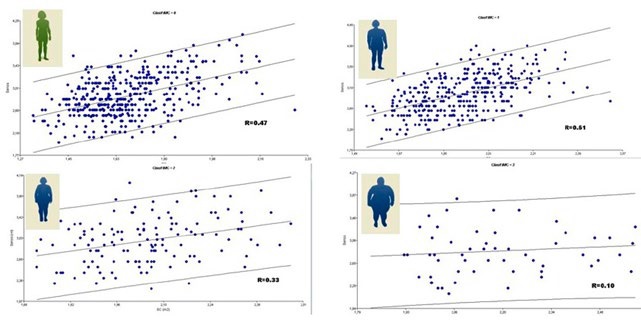
Results: The 95th percentile of all absolute AoD was below 3.80 cm; AoD indexed by height was 2.08 cm/m and 2.11 cm/m2 indexed by body surface area (BSA). The global analysis showed a positive and significant correlation of all AoD with BSA and height, as well as with age, except for the aortic annulus which did not change over time. In individuals with increased body mass index, BSA did not correlate with AoD. Women had lower AoD in all segments and in the aortic root, even after indexing it by height. Native American subjects had lower absolute and indexed AoD than Caucasian ones at all aortic levels (p <0.01), except for the proximal descending aorta, which showed no significant differences.
Conclusions: Demographic, anthropometric and ethnic variables were significant determinants of aortic dimensions at all levels, so they must be taken into account for interpretation.
Downloads
Published
Issue
Section
License
Copyright (c) 2025 Argentine Journal of Cardiology

This work is licensed under a Creative Commons Attribution-NonCommercial-ShareAlike 4.0 International License.





