Acute ST-segment Elevation Myocardial Infarction in Argentina. Data from the continuous ARGEN-IAM-ST registry
pp. 289-298
DOI:
https://doi.org/10.7775/rac.es.v88.i4.18501Keywords:
Myocardial infarction - ST segment elevation myocardial infarction - Epidemiology - Coronary balloon angioplasty ReperfusionAbstract
Background: The National ST-segment elevation Acute Myocardial Infarction (ARGEN-AMI-ST) registry carried out in 2015 provided data on the reality of AMI in Argentina.
Objective: The aim of this study was to present an updated report of the ARGEN-AMI-ST registry.
Methods: This was a national, prospective, multicenter study. After the first phase of the ARGEN-AMI-ST survey, centers were invited to continue with the AMI registry including patients with up to 36-hour electrocardiographic STEMI evolution
Results: The analyzed population comprised 2,464 patients assisted in 78 centers. Mean age was 60±12 years and 80% were men. Preventable risk factors were: 45% smoking, 58% hypertension, 24% diabetes, 41% dyslipidemia and 11% history of coronary heart
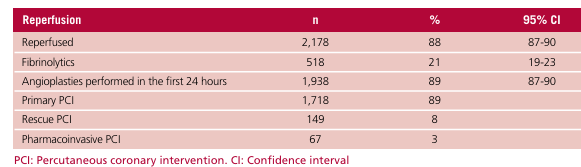
disease. Eighty-eight percent of patients underwent reperfusion, and among them, 21% received thrombolytics and 89% percuta
neous coronary intervention. The delay from onset of symptoms to admission was 130 minutes (IQR 25-75: 60-305); physicians reported delays to treatment in 49% of cases, with an impact on total ischemic times (TIT). In-hospital mortality was 8.7%. In the multivariate analysis, being treated in a center with hemodynamic availability was not independently associated with survival.
Conclusions: Current data from the continuous AMI registry in Argentina are similar to those shown in the 2015 survey. Delays to treatment are important, especially due to the delay in patient consultation, which greatly impacts on TIT.
Downloads
Published
Issue
Section
License
Copyright (c) 2020 Argentine Journal of Cardiology

This work is licensed under a Creative Commons Attribution-NonCommercial-ShareAlike 4.0 International License.