
The Obesity Paradox of Heart Failure in the Elderly
pp 203-208
DOI:
https://doi.org/10.7775/rac.es.v89.i3.20233Keywords:
Heart Failure, Obesity Paradox, Body Mass Index, ElderlyAbstract
Background: Multiple studies have demonstrated a “protective” relationship of increased body mass index (BMI) over normal or low BMI in the development and prognosis of heart failure. The BMI categories of the adult population are not adequate in the elderly population. We propose to compare the incidence of global mortality and/or readmission for heart failure during the first year according to the BMI category in this population.
Methods: This was an observational and analytical study of a retrospective cohort of patients ≥65 years admitted to the cardiology intensive care unit of Hospital Italiano de Buenos Aires with a diagnosis of Acute Heart Failure Syndrome (AHFS) between January 2013 and December 2017.
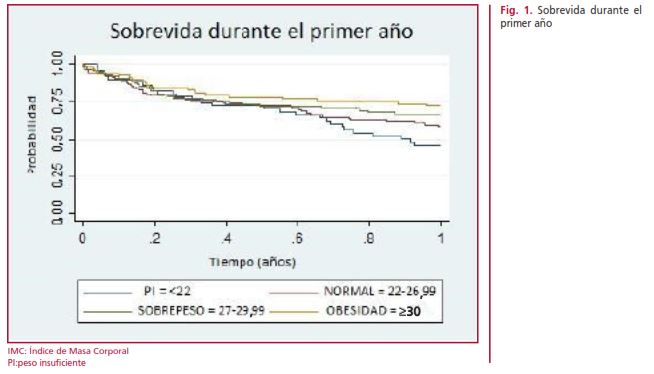
Results: The study included 409 patients. The subgroups with higher BMI had lower mortality at one year (Underweight: 53%, Normal weight: 41%, Overweight: 33%, Obese: 27%, p = 0.008). In the multivariate analysis, annual mortality HR adjusted for age, gender, readmissions, kidney failure and type of heart failure was 0.51 (95% CI 0.29-0.90) for overweight patients and 0.36 (95% CI 0.19-0.67) for patients with obesity compared with underweight patients. There were no differences in inhospital mortality or in readmissions at one year between the different BMI subgroups.
Conclusion: In the elderly population with AHFS, the subgroups with higher BMI have a better prognosis during the first year, fulfilling the “obesity paradox”.
Downloads
Published
Issue
Section
License
Copyright (c) 2025 Argentine Journal of Cardiology

This work is licensed under a Creative Commons Attribution-NonCommercial-ShareAlike 4.0 International License.





