
Prognostic Significance of the Initial Electrocardiographic Pattern in Acute Inferior Myocardial Infarction for the Appearence of Early AV Block
pp. 91-96
DOI:
https://doi.org/10.7775/rac.v65i1.4103Keywords:
Inferior myocardial infarction, Advanced atrioventricular block, Electrocardiographic patternsAbstract
In patients with inferior myocardial infarction the appearance of advanced atrioventricular block is correlated with a worse prognosis . The relationship between the initial electrocardiographic pat-
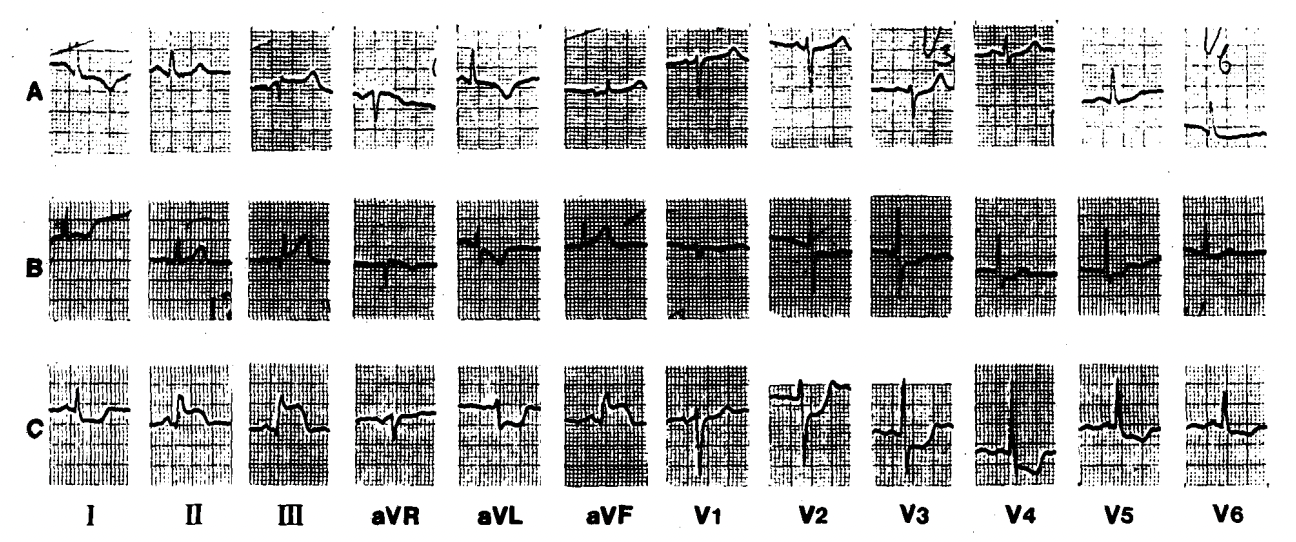
tern and the appearance of advanced atrioventricular block has not yet been investigated . We studied 195 patients and classified them into three groups according to the initial electrocardiographic pattern, as follows: group A : tall peaked positive T waves in the involved leads, without ST elevation or major changes in the terminal portion of the QRS; group B : positive T waves, ST elevation (≥ 0.1 mV) without major changes in the QRS ; group C: positive T waves, ST elevation (≥ 0 .1 mV), accompanied by distortion of the terminal part of the QRS complex in one or more leads . Early advanced atrioventricular block developed in only one patient (5%) in group A and in two patients (3%) in group B compared with 15 patients (15%) in group C (p = 0.01), with a positive predictive value of 83% for group C. Pattern C had a strong predictive value for the appearance of atrioventricular block in the monovariant model (odds ratio = 6 .26) and the multivariant model (odds ratio = 5 .28) .
Conclusion
Patients with pattern C are at high risk of early advanced atrioventricular block .
Downloads
Published
Issue
Section
License
Copyright (c) 2026 Argentine Journal of Cardiology

This work is licensed under a Creative Commons Attribution-NonCommercial-ShareAlike 4.0 International License.





