Second Study Comparing Prophylaxis of Supraventricular Tachyarrhythmias in Cardiovascular Surgery: Mg. Sulphate vs. Atenolol
pp 603-615
DOI:
https://doi.org/10.7775/rac.v64i6.3793Keywords:
Supraventricular tachyarzhythmias, Coronary artery surgery, Heart surgery, Postoperative complications , Atrial fibrillation, Magnesium sulphate, AtenololAbstract
Background
Supraventricular tachyarrhythmias are a very frequent complication in the postoperative period of the coronary artery bypass surgery. Many therapeutic and prophylactic schedules, have been described and a lot of predictors too.
Objectives
1) To assess if the intravenous administration of magnesium sulphate in high dose in this period, is an effective tool for prevention of these arrhythmias either in the coronary artery bypass surgery or in the noncoronary cardiovascular surgery. 2) To confirm the effectivity of atenolol low dose peros, early in the postoperative period. 3) To obtain a statistical multivariability model, looking for independent predictive factors of supraventricular tachyarrhythmias in the postoperative period.
Material and method
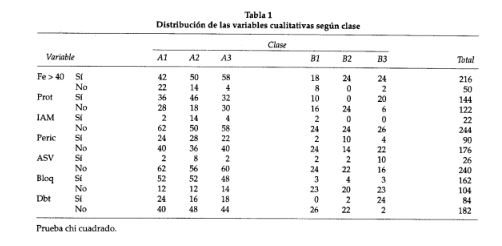
After the exclusion of 34 patients, 266 patients undergoing a cardiopulmonary bypass operation, were randomized into six study groups: groups A-1 (coronary; n = 64) and B-1 (non coronary; n = 26),received intravenous high dose of magnesium sulphate. Groups A-2 (coronary; n = 64) and B-2 (noNcoronary; n= 24), received atenolol 50 mg daily and groups A-3 (coronary; n = 62) and B-3 (noncoronary; n = 26), consisted of their controls. There were no differences in preoperative variables into each group of coronary artery bypass surgery (A) and noncoronary surgery (B).
Results
In the whole population of 266 patients included, 68of them (25.6%), had supraventricular tachyarrhythmias in the postoperative period, incidence was similar between groups (A = 26.3%; B = 23.6%). Al-most 90% were episodes of atrial fibrillation with a high ventricular rate. Maximal peak of presentation was around day 1. Efficacy of treatments: subgroups 1-magnesium sulphate (A-1 +B-1): 26.6%; subgroup 2-atenolol (A-2 +B-2):9.1%; and subgroup 3-control (A-3 +B-3): 41% [2 versus 1and 3: p < 0.003]. Preoperative supraventricular tachyarrhythmias (p < 0.00006); non treatment with atenolol (p < 0.0028) and the group A patients(coronary artery bypass surgery) (p < 0.005), were the strongest independent predictors. Also, the time of ischemia during the cardiopulmonary by-pass (p < 0.025) and older age (p < 0.015) were predictive factors.
Conclusions
1) Once more, the efficacy of atenolol in the prophylaxis of supraventricular tachyarrhythmias in the postoperative period was confirmed either in the coronary artery bypass surgery or in the noncoronary surgery. 2) The intravenous magnesium sulphate high dose, was not effective. 3) Pre-operative supraventricular tachyarrhythmias, not treatment with atenolol, the coronary artery bypass surgery group of patients, no longer time of ischemia and older age were independent predictors of supraventricular tachyarrhythmias in the post-operative period.
Downloads
Published
Issue
Section
License
Copyright (c) 2026 Argentine Journal of Cardiology

This work is licensed under a Creative Commons Attribution-NonCommercial-ShareAlike 4.0 International License.