
Relationship Between High Serum Levels of Vitamin E, Heart Enzimes Decay and Magnitude of Electrocardiograph Injury in Patients with Acute Myorcardial Infarction
pp 525-530
DOI:
https://doi.org/10.7775/rac.v65i5.3626Keywords:
Vitamine E, Acute Myocardial Infarction, ElectrocardiogramAbstract
BackgroundA growing amount of scientific evidences supportsthe participation of oxygen radicals in heart dis-ease, and consequently, a protecting effect of vita-min E and other antioxidants. The aim of this study was to correlate plasma vitamin E concentration with the clinical course of the acute myocardial infarction.
Material and method
We evaluated 115 patients that were admitted at the coronary units within the 24 hours of the acute myocardial infarction. The acute myocardial infarction was diagnosed by clinical and biochemical criteria and by electrocardiogram. Plasma vitaminE concentration was determined by HPLC. To evaluate the clinical importance of the acute myocardial infarction, the electrocardiogram and echo-cardiography were used as well the plasma levels of creatine phosphokinase.
Results
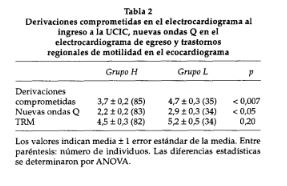
The patients were segregated according to the plasma concentration of vitamin E: group H, vita-min E > 18 μM and group L, vitamin E < 18 μM. No significant differences between the groups were found for clinical background, age, sex, associated cardiovascular risk factors, acute myocardial infarction localization, hemodynamic class, or the treatment received. The number of compromised derivation in the electrocardiogram at admittance was significantly higher in L than in H (4.7 ± 0.3 versus 3.7 ±0.2; p < 0.005).The number of new Q waves in the electrocardiogram of release was higher in L than inH (2.9 ± 0.3 versus 2.2 ± 0.2; p < 0.05). The serum lev-els of creatine phosphokinase evaluated either 24hours as 48 hours after admittance, were also higher in L thanin H (24 hours:H= 445 ±35 U/ml versus L=642 ±84 U/ml; p < 0.02; 48 hours:H=252 ±21 U/ml; L= 423 ±82 U/ml; p < 0.006). The number of segments affected in the echocardiograms was: L = 5.2 ±0.5versus H= 4.5 ± 0.3; p = 0.20.ConclusionsThe obtained results indicate that a high concentration of vitamin E was associated with a diminution in the creatine phosphokinase release and with the acute myocardial infarction electrocardiographic extension.
Downloads
Published
Issue
Section
License
Copyright (c) 2026 Argentine Journal of Cardiology

This work is licensed under a Creative Commons Attribution-NonCommercial-ShareAlike 4.0 International License.





