
Unstable Haemodynamia in Early Postoperatory of Cardiac Surgery (Part 1)
pp. 449-456
DOI:
https://doi.org/10.7775/rac.v70i6.3530Keywords:
Cardiac Surgery, Haemodynamic monitoring, Postsurgical complicationsAbstract
Objectives
Our main objectives while performing this study were: a) assessment of the prevalence of unstable haemodynamia in the early postoperatory period, b) establishment of the haemodynamic patterns responsible of the unstability and prognosis, and c) Assessment of the therapeutic changes secondary to hemodynamic fin-dings. We also performed an analysis of associated complications.
Material and Methods
Cardiac surgeries of the participating centres were included between 01/01/99 and 12/01/01.Those patients showing unstable early haemodynamia were selected as the study population. Patients with hypotension during the presence of arrhythmias or active bleeding, or with hypovolemia were excluded. The patterns of low cardiac output, vasoplegic syndrome, right ventricular dysfunction and cardiac tamponade were established. A p valueless than 0.05 was considered statistically significant.
Results
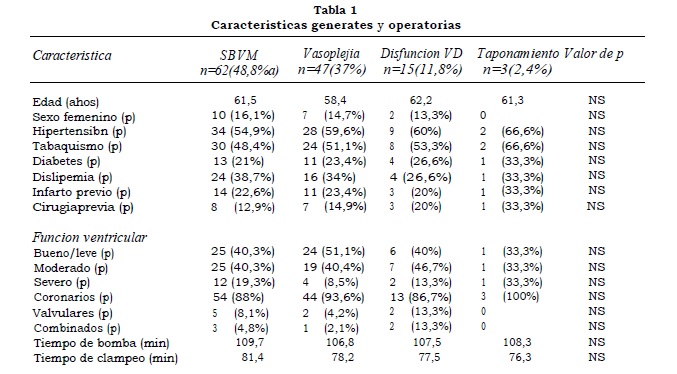
The initial population was of 1054 patients, 127of them showed unstable haemodynamia (12%). The most frequent pattern found was that of low cardiac output (62 patients, 48.8%) followed by vasoplegic syndrome (47 patients, 37%), right dysfunction (15 cases, 11.8%) and cardiac tamponade (3 patients, 2.4%). The haemodynamic finding implied a therapeutic change in all cases. Thirty-four patients died, 29 in thelow cardiac output group (46.7%), 4 patients inthe vasoplegic group (8.5%) and one in the rightdysfunction group (6.6%). Five patients developed fever, showing two positive hemocultures (1.6%). Only one patient showed a catheter born infection (0.8%).
Conclusions
Unstable early haemodynamia was seen in 12% of the operated patients. The haemodynamic patterns seen were low cardiac output, 48.8%; vasoplegia, 37%; right dysfunction, 11.8%; and cardiac tamponade, 2.4%. Low cardiac output patients were those with the worst prognosis.The haemodynamic findings implied therapeutic changes in all patients. The incidence of complications was low, two patients with positive hemocultures and one with a catheter born infection.
Downloads
Published
Issue
Section
License
Copyright (c) 2026 Argentine Journal of Cardiology

This work is licensed under a Creative Commons Attribution-NonCommercial-ShareAlike 4.0 International License.





