
Capability of Pharmacological Echo-Stress Test to Detect Major Cardiac Events in the Follow-up After Acute Myorcardial Infarction
pp 177-184
DOI:
https://doi.org/10.7775/rac.v65i2.3474Keywords:
Pharmacologic stress echocardiography, Postinfarction prognosis, Dobutamine echo, Dipirydamole echoAbstract
Background
Survivors of acute myocardial infarction constitute a subset of patients susceptible to present cardiac events during follow-up. The assessment of residual ischemia is a major determinant for risk stratification.
Objectives
Determine whether the result of a dipyridamole or dobutamine echocardiography test could pro-vide long term prognostic information about reinfarction. and cardiac death.
Method
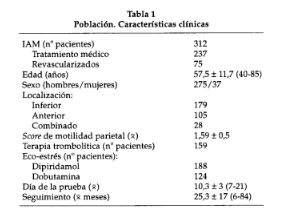
312 patients, aged 30-85 years (mean (57.5), 275 males, were evaluated after an acute myocardial infarction before hospital discharge (mean 10.3days), 188 patients with a high single dose of 0.84mg/kg dipyridamole over 4 minutes, and 124 patients with dobutamine at increasing doses 5 to 40 mcg/kg/min. All patients under medical treatment were followed-up for a mean of 25.3 ± 17 months (6-84).
Results
89 (37.5) patients out of the 237 patients who received medical therapy developed an ischemic response during stress echo. After discharge 23 major events were diagnosed with the following distribution:
Echo-stress Echo-stress p Value Odds ratio
(+) (-)
(n = 89) (n = 148)
Reinfarction 6(6.7%) 7(4.7%) 0.5 1.46
Total cardiac death 7(7.8%) 3(2.0%) 0.03 4.15
Sudden death 6(6.7%) 0(0.0%) 0.006 ---
Conclusions
A positive test with dipirydamole or dobutamine performed early after an acute myocardial infarction identified the patients with higher risk of sudden death but could not predict reinfarction.
Downloads
Published
Issue
Section
License
Copyright (c) 2026 Argentine Journal of Cardiology

This work is licensed under a Creative Commons Attribution-NonCommercial-ShareAlike 4.0 International License.





