
Coronary risk factors in a healthy adulto population from San Miguel de Tucumán
pp 441-447
DOI:
https://doi.org/10.7775/rac.v60i5.3438Abstract
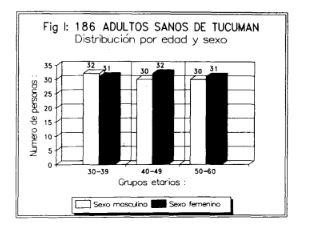
The purpose of this study was to define the incidence of coronary risk factors in a population without a known disease of S. M. de Tucumán, Argentina. It enrolled 186 workers of the Public Services, 92 males and 94 females, aged between 30 and 60 years. The database of the study included the following informations: 1. Reference to the enrolled people of the existence of angina pectoris or heart attack in parents or brothers, or a cardiac death in these relatives when it occurred at age 50 or less. For statistical purposes, a cardiac death was not included as angina pectoris or heart attack. 2. Life-style of the person in the study: routine sport practice during free time, smoking habits. anticonceptive plls administration. 3. Anthropomorphic measurements: weight in kilograms and height in centimeters. 4. Menopause and estrogen therapy. 5. Cuff blood pressure readings by calibrated anaeroid manometers after a rest of 5 minutes. the person being 30 minutes without. smoking. their left harm comfortable laying on a table at the level of the heart. 6. Biochemical risk factors determinations in vein blood samples after a 12 hour fasting period. Hypertension was diagnosed at diastolic pressure values above 90 mmHg and considered mild between 90-104, moderate between 105-114. and severe above 115 mmHg. Systolic hypertension was diagnosed at normal diastolic measurements and systolic pressure values above 150 mmHg. The fasting glucose upper normal value was 114 mg/dl. Values between 115-140 mg/dl were considered to be in the range of the glucose intolerance and reports above 140 mg/dl in that of diabetes mellitus. The upper normal value for blood total cholesterol was the 75th percentile, 200 mg/dl for a population aged above 29. LDL cholesterol readings were interpreted and coded as follows: < 100 mg/dl, normal lipid risk; 100-149 mg/dl, inter- mediate risk; ~ 150 Dlg/dl, high risk, in persons at intermediate lipid risk, values ~ 4.5 in the total cholesterol/HDL cholesterol relation, or ~ 3.0 in the LDL/HDL relation, identified a subgroup at additional risk by reduction in the protective HDL lipoproteins blood levels. Hypertriglyceridemia was diagnosed at triglycerid levels above 250 mg/dlin the absence of cholesterol or glucose abnormalities. Obesity was define as values in excess of 1.25 when relating the anthropomorphic data weigh/height-l 00. Absence of a regular physical activity during free-time was the most frequent coronary risk factor in our population (81.1 %), followed by hypercholesterolemia (58.6 %). The average blood cholesterol value in 186 normal adults of Tucumán was 211.7 mg/dl, which was above the upper normal of 200 mg/dl. The 135.3 mg/dl average value for LDL- cholesterol was in the intermediate-risk category. An abnormal result of 5.0 in the total cholesterol/HDL cholesterol ratio was found in males, whose HDL blood concentration average was inferior than the one found in females (44.0 mg/dl versus 51 mg/dl). Total and LDL cholesterol blood levels were strongly related to age in males and females. The regression analysis results of the relationship between LDL blood concentration in females and age were 0.24 for the standard error of the dependent estimate (Std Err of Y Est) and 0.99 for the coefficient of determination (R Squared). After age 40 incidence of hypercholesterolemia was greater in females. The incidence of other coronary risk factors in this population were: smoking (39.3 0/0), hypertension (24.2 %), obesity (21.5 %), hyperglucemia (7.0 %), hypertrygliceridemia (7.0 %). Absence of any risk factor for CAD in the group studied was found in 5.4 %. (...)
Downloads
Published
Issue
Section
License
Copyright (c) 2026 Argentine Journal of Cardiology

This work is licensed under a Creative Commons Attribution-NonCommercial-ShareAlike 4.0 International License.





