
ECG in Relatives of Patients with Duchenne Disease
pp 177-182
DOI:
https://doi.org/10.7775/rac.v70i3.2971Keywords:
X-linked, Duchenne, Dystrophin, CardiomyopathyAbstract
Introduction
Duchenne's muscular distrophy (DMP-D) is an X-linked transmitted muscular disease (dystrophino-pathy) with somatic and cardiac muscle compromise and characteristic electrocardiographic (ECG) expression. The disease affect males exclusively, while mothers and sisters may only be carriers.
Objective To analyze ECG of mothers, sisters and brothers of patients with DMP-D disease in order to detect characteristic changes which can lead to carriers identification in advance.Material and methodThe ECG from 73 apparently healthy relatives of 81 patients with DMP-D were studied : 39 mothers, 20 sisters and 14 brothers. In each ECG they were measured PR interval, QRS duration and axis, Q wave voltage in D1, D2, D3, aVF, V4, V5and V6, R/S ratios in V1, and intraventricular conduction and rhythm disturbances. Results were checked with those of a control population composed by healthy individuals with similar characteristics and statistically evaluated.ResultsIn 26 mothers (66.66%) the ECG showed V1 in-creased R/S ratios. In 7 healthy brothers (50%) in-creased Q values were observed in V4, V5 and V6.The ECG comparative study with control group showed statistically significative differences. ConclusionsAlmost half (45%) the relatives of DMP-D patients showed ECG signs consistent with the disease, seldom found in the control group, suggesting some degree of cardiac isolated compromise. The ECG abnormalities search in DMP-D patients relatives could help identify of healthy carriers, thus preventing disease.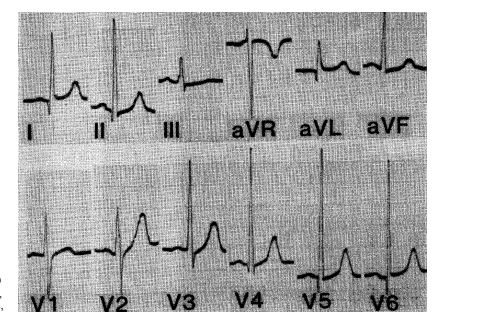
Downloads
Published
2026-02-27
Issue
Section
ORIGINAL ARTICLES
License
Copyright (c) 2026 Argentine Journal of Cardiology

This work is licensed under a Creative Commons Attribution-NonCommercial-ShareAlike 4.0 International License.





