
Renal Abnormalities in Essential Hypertension. From the Genetics to the Renoprotective Effect of the Antihypertensive Treatment
pp 329-336
DOI:
https://doi.org/10.7775/rac.v70i4.2779Keywords:
essential hypertension, renal damage, renoprotection, antihypertensivesAbstract
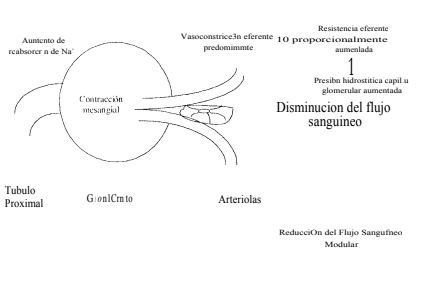
Essential hypertension is a frequent cause of chronic renal damage. Even though the underlying pathogenic mechanisms remain mainly unknown, the genetic factors are decisive to establish salt-sensitivity and it has been postulated that the number of functional nephrons at birth determines which will be the individual bias for the eventual development of hypertension. Furthermore, low birth weight can impede the renal development, reduce the glomeruli number and/or diminish the filtration surface with the development of glomerular hypertension. The alteration of the selfregulatory mechanism accompanies the reduction of the renal blood :flow. Several neurohumoral factors contribute to this disturbance. Prominent among them are the plasmatic concentrations of angiotensin II (Ali) which are higher than the expected according to the blood pressure measurements (BP). AII produces intense vaso constriction mainly of the efferent arteriole as well as reduction of the renal blood: flow and in crease of tubular reabsorption ofNa+. This imbalance among vasopressor factors -as sympathetic activity, endothelins, digitalics-like factors- and vasorelaxant factors -as renal prostaglandins, nitrie oxide, kallikreins-kinins and atrial natriuretic peptide- acquires great importance in the generation of renal alterations associated to hypertension. Aldosterone stimulates fibrosis and renal dysfunction. Furthermore, it exerts a facilitator effect on the vascular receptors of AII. From a renoprotective perspective, there is no conclusive evidence that the antihypertensivedrugs whichreducetheproteinuria constitute the first election. Nevertheless the reduction ofthe BP is effective to decrease the progression ofthe renal functional and structural alterations, independently of the pharmacological therapy chosen.
Downloads
Published
Issue
Section
License
Copyright (c) 2026 Argentine Journal of Cardiology

This work is licensed under a Creative Commons Attribution-NonCommercial-ShareAlike 4.0 International License.





