
Biomarkers of Atherosclerosis and Indicators of Insulin Resistance in Non-Diabetic Acromegalic Patients
pp 173-179
DOI:
https://doi.org/10.7775/rac.v76i3.2401Keywords:
Acromegaly, Atherosclerosis, Lipoproteins, Biological MarkersAbstract
Background
Cardiovascular, respiratory and metabolic comorbidities associated with acromegaly contribute to a significant increase in the mortality of this disease. Many of these patients are also diabetic. Although it is frequent to find abnormal lipid and lipoprotein profiles in patients with acromegaly, controversial outcomes arise in an attempt to identify and/or establish the degree of the modifications of specific parameters.
Objectives
To assess the presence of biomarkers of atherosclerosis in non-diabetic patients with active acromegaly and its association with growth hormone (GH) and with insulin-like growth factor type 1 (IGF-1).
Material and Methods
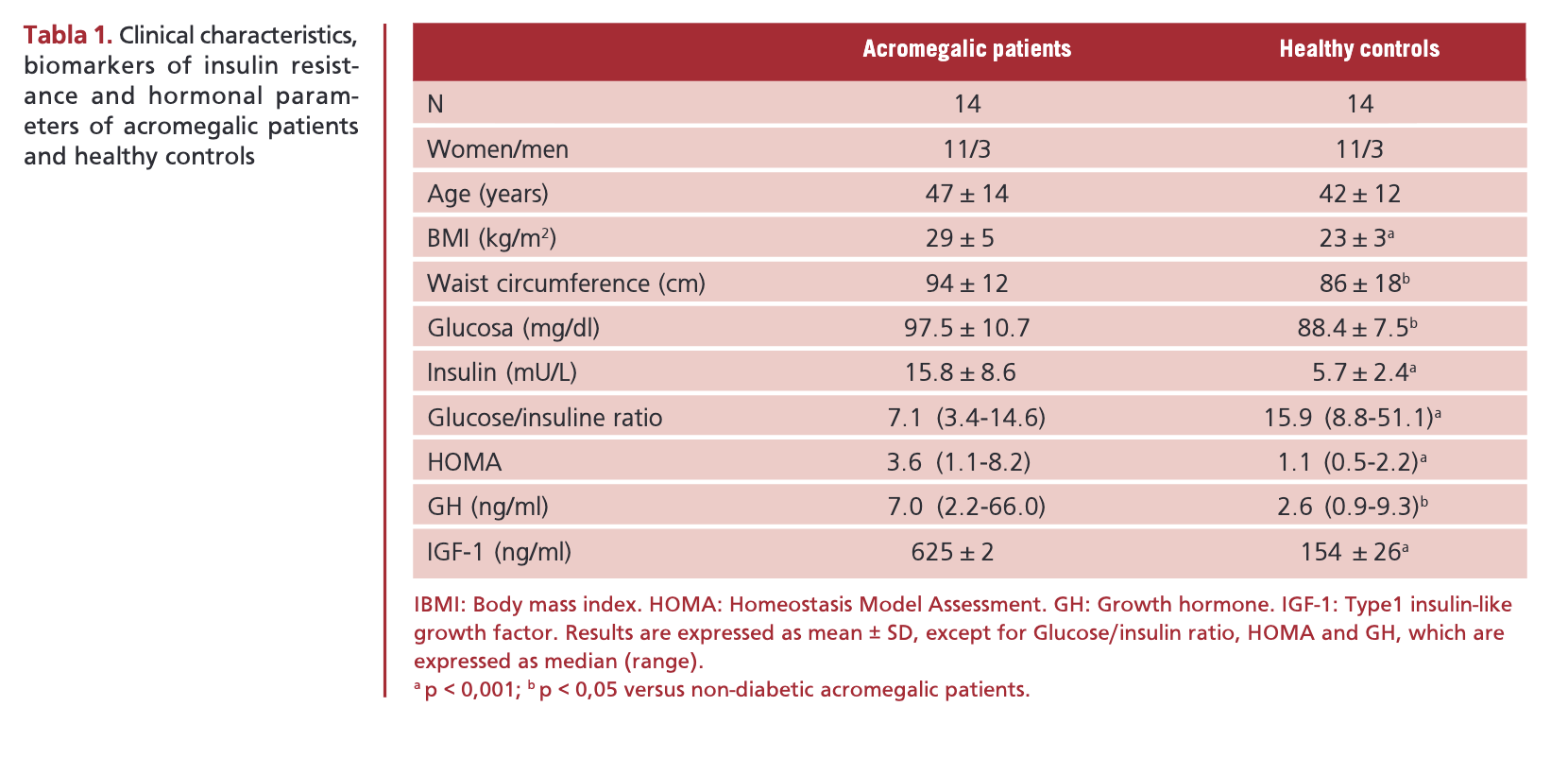
The study included 14 patients and 14 healthy controls, pared by sex and age. Serum concentration of GH and IGF-1 were determined by immunoassays. Indicators of insulin resistance (glucose, insulin and HOMA) were measured, as well as lipoprotein profile, plasmatic levels of oxidized LDL (oxLDL), vascular cell adhesion molecule 1 (VCAM-1), endothelin-1 and lipoprotein-associated phospholipase A2 activity (LpPLA2).
Results
Compared to controls, non-diabetic acromegalic patients had increased levels of GH (p<0.05) and IGF-1 (p<0.001), of indicators of insulin resistance (insulin p<0.001; HOMA p<0.001), triglycerides (p<0.05), apo B (p<0.001), oxLDL (117±20 versus 89±23 U/L; p<0.05) and endothelin-1 (0.9±0.2 versus 0.7±0.2 pg/ml; p<0.05). In addition, GH and IGF-1 were positively associated with (r; p <) insulin (0.40; 0.05 y 0.73; 0.001), HOMA (0.39; 0.05 and 0.74; 0.001), triglycerides (0.57; 0.05 and 0.64; 0.001), very low-density lipoprotein cholesterol (VLDL-C) (0.54; 0.05 and 0.47; 0.05), apo B (0.40; 0.05 y 0.54; 0.05), oxLDL (0.59; 0.05 and 0.66; 0.05) and endothelin-1 (0.55; 0.05 y 0.51; 0.05).
Conclusions
Non-diabetic patients with active acromegaly presented an insulin resistance state, as well as subtle modifications of lipid profile and increased levels of oxLDL and endothelin-1. These alterations could explain why these patients are more likely to develop atheroscle- rotic cardiovascular disease in addition to acromegalic cardiomyopathy.
Downloads
Published
Issue
Section
License
Copyright (c) 2025 Argentine Journal of Cardiology

This work is licensed under a Creative Commons Attribution-NonCommercial-ShareAlike 4.0 International License.





