Correlation Between CHA2 DS2 -VASc Score and Atrial Thrombus in Patients with Atrial Fibrillation Undergoing Cardioversion
pp 144-150
DOI:
https://doi.org/10.7775/rac.v81i2.2061Keywords:
Atrial Fibrillation, Transesophageal Echocardiography, Thrombus, Thromboembolism, Cardioversion, Anticoagulants, Ventricular FunctionAbstract
Background
Patients with atrial fibrillation represent a group of risk for thromboembolic complications, with catastrophic con- sequences when affecting the central nervous system. The performance of risks scores to predict clinical events has been evaluated by several publications; yet, its correlation with the presence of thrombi in the left atrium or left atrial appendage has been poorly investigated. The use of the CHA2 DS2 -VASc score has been recently proposed for stratification of throm- boembolic risk.
Objective
To evaluate the prevalence of left atrial thrombus and its correlation with the components of the CHA2 DS2 -VASc score and with left ventricular systolic function in patients scheduled for electrical cardioversion.
Methods
A prospective registry of the medical history of patients with atrial fibrillation of unknown duration or lasting >48 hours, undergoing transesophageal echocardiography before scheduled electrical cardioversion was conducted. The correlation of the components of the CHA2 DS2 -VASc scores and of the total score with the presence of thrombi in transesophageal echocardiography was analyzed. The result of the sum of theCHA2DS2 -VASc score plus a score of left ventricular systolic function (normal = 0, mild dysfunction = 1, moderate dys- function = 2, severe dysfunction = 3) was also evaluated.
Results
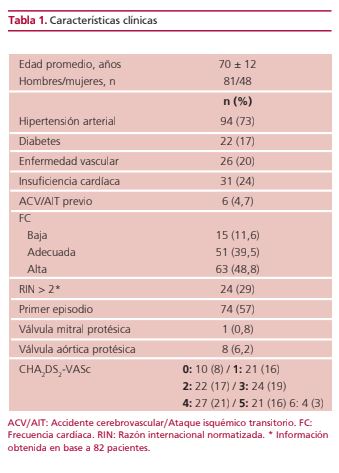
A total of 129 patients (mean age 70±12 years) were included; 21 (16%) had thrombus. This finding was more prevalent in patients with risk factors, but was only statistically significant for heart failure and diabetes. The risk of thrombus in the LA/LAA progressively increased at higher CHA2 DS2 -VASc (3.6±1.6 with thrombus vs. 2.7±1 without thrombus; p = 0.024, area under the ROC curve = 0.65). This association was greater when left ventricular systolic function was included (p = 0.006, area under the ROC curve = 0.69). A CHA2
DS2 -VASc < 2 did not warrant the absence of thrombi.
Conclusions
The CHA2 DS2 -VASc score, developed to predict the risk of thromboembolic events is also associated with the presence of thrombus in patients with atrial fibrillation of unknown duration. The addition of left ventricular systolic function to the total score might improve its predictive capacity.
Downloads
Published
Issue
Section
License
Copyright (c) 2025 Argentine Journal of Cardiology

This work is licensed under a Creative Commons Attribution-NonCommercial-ShareAlike 4.0 International License.