
Experience with a Fenestrated Stent Graft. A Case Report
pp. 55-58
DOI:
https://doi.org/10.7775/rac.v79i1.2021Keywords:
Abdominal Aortic Aneurysm, Vascular ProsthesisAbstract
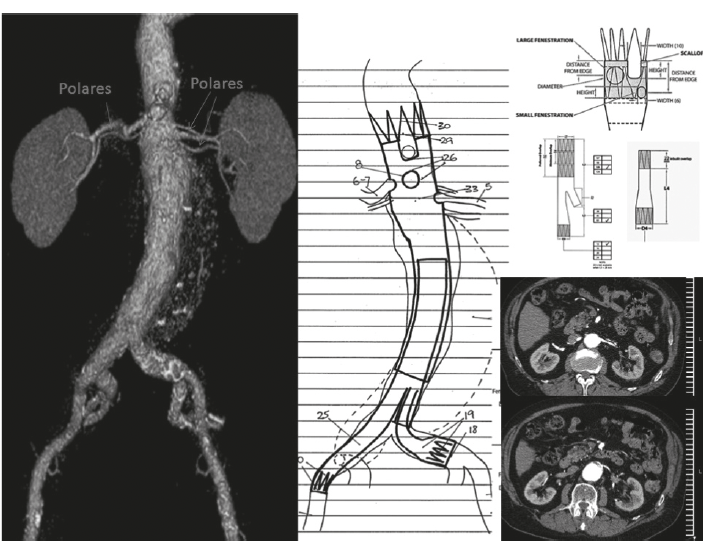
In patients with juxtarenal abdominal aortic aneurysm, the normal segment of infrarenal aorta necessary to obtain the proximal anchoring endograft is insufficient or lacking, for what with traditional endografts, there is no possibility of sealing or excluding the aneurysm. For this reason, in recent years, endografts with fenestrations (orifices) have been used for the preservation of visceral and renal branches as a valid and less invasive therapeutic alternative. In this presentation we describe the first case of a juxtarenal aortic aneurysm treated in our country by placing an endograft with multiple fenestrations. This is a high surgical risk patient due to clinical comorbidities, to whom under regional anesthesia was placed an endograft with fenestrations to preserve the blood flow to the celiac trunk, superior mesenteric artery and both renal arteries. The procedure was successful with complete exclusion of the aneurysm. The first postoperative control showed exclusion of aneurysm with adequate patency of the visceral branches.
Downloads
Published
Issue
Section
License
Copyright (c) 2025 Argentine Journal of Cardiology

This work is licensed under a Creative Commons Attribution-NonCommercial-ShareAlike 4.0 International License.





