
Reluctance to Use Statins in Secondary Prevention: Worrying Results in the Age of Digital Misinformation SAC 2025 Statin Experience – Argentine Society of Cardiology
pp. 373-376
DOI:
https://doi.org/10.7775/rac.es.v93.i5.20933Keywords:
Statins, Secondary prevention, Treatment adherence, Medical misinformation, Nocebo effect, Cardiovascular diseasesAbstract
Background: Adherence to statin therapy in secondary cardiovascular prevention remains a clinical challenge. Medical misinformation, especially through digital media, has been identified as a possible contributing factor to this problem.
Objective: To describe the reasons for patients' reluctance to use statins in secondary prevention., according to the perception of health professionals in Argentina.
Methods: An anonymous and voluntary survey was conducted between March and April 2025, distributed through the Argentine Society of Cardiology, with the participation of 638 health professionals. Data were collected on the frequency and reasons for statin refusal, perception of recent changes, and acceptance of other therapies.
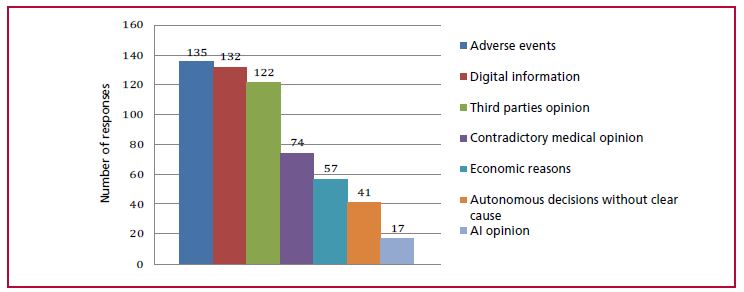
Results: A total of 40.9% of respondents reported recent rejection of statins. The main reasons were adverse events (53.4%) and the influence of negative digital information (50.5%). Other factors included advice from third parties, controversial medical indications, economic reasons, and autonomous decisions. Other therapies were accepted by 74% of patients who rejected statins, and 66.6% of professionals noted an increase in this trend.
Conclusions: Reluctance to use statins represents a growing threat to cardiovascular prevention in Argentina. The results highlight the impact of medical misinformation on therapeutic decisions. It is essential to implement educational and communication strategies aimed at professionals and patients to reverse this trend.
Downloads
Published
Issue
Section
License
Copyright (c) 2025 Argentine Journal of Cardiology

This work is licensed under a Creative Commons Attribution-NonCommercial-ShareAlike 4.0 International License.





