
Endovascular Treatment in Aortoiliac Occlusive Disease
pp 242-245
DOI:
https://doi.org/10.7775/rac.v84.i3.5692Keywords:
Ischemia Iliac Artery/pathology - Endovascular Procedures - Stents - Arterial Occlusive DiseasesAbstract
Background: Open surgery is the traditional treatment of aortoiliac TASC type C and D lesions. However, as morbidity and mortality rates of open surgery are not negligible, endovascular treatment has emerged as a less invasive option over the last decade.
Objective: The aim of this study is to analyze our results with endovascular treatment of these iliac lesions using the primary stenting technique.
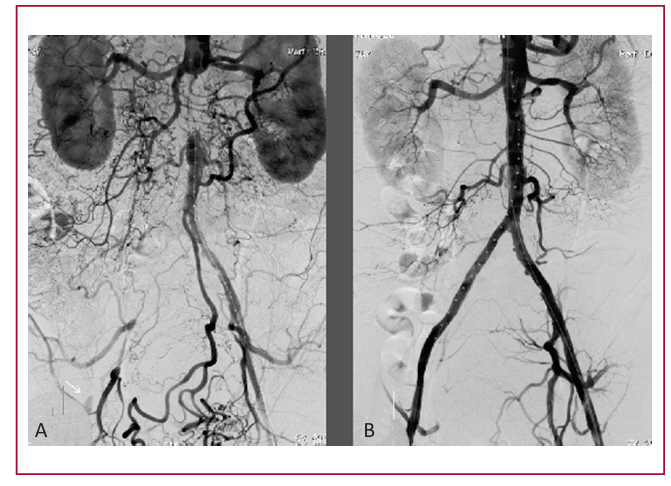
Methods: We performed a retrospective and descriptive analysis of 32 endovascular interventions for TASC C-D lesions performed from January 2012 to October 2014 to evaluate technical success, perioperative mortality and patency.
Results: Technical success was achieved in the 32 (100%) lesions treated. Primary patency was 96.8% after a mean follow-up of 14 months. Cumulative mortality was 6.25% (2 patients) during follow-up.
Conclusions: In our experience, endovascular treatment of aortoiliac TASC type C and D lesions is a feasible and safe procedure with a high recanalization rate. Endovascular treatment of this type of lesions could be considered a valid option if these findings are confirmed in large randomized controlled trials comparing this strategy with surgery.
Downloads
Published
Issue
Section
License
Copyright (c) 2016 Argentine Journal of Cardiology

This work is licensed under a Creative Commons Attribution-NonCommercial-ShareAlike 4.0 International License.





