
Genetic Testing of Familial Hypercholesterolemia in a Hospital-Based Population of the City of Buenos Aires
pp 101-107
DOI:
https://doi.org/10.7775/rac.v86.i2.11334Keywords:
Cholesterol, Risk Factor, Receptors, LDL, Hyperlipidemias -, Anticholesteremic AgentsAbstract
Background: Familial hypercholesterolemia is a primary hyperlipidemia. It is an autosomal dominant genetic disorder of lipoprotein metabolism, characterized by elevated plasma concentration of low-density lipoprotein cholesterol and presence of tendon xanthomas, and is associated with early cardiovascular disease.
Objectives: The aim of this study was to investigate the presence of mutations in the main gene associated with the development of familial hypercholesterolemia (LDLR) in a group of patients identified as “index cases” attending the Lipid Clinic of Hospital Universitario Fundación Favaloro with clinical diagnosis of familial hypercholesterolemia, and to determine the ancestral composition of the study population.
Methods: We evaluated 38 patients with clinical diagnosis of familial hypercholesterolemia. Mutation screening of the LDLR gene
coding region and adjacent intronic areas was performed using Sanger sequencing. The ancestral component of the study population was investigated using 46 ancestry-informative markers (AIM-Indel).
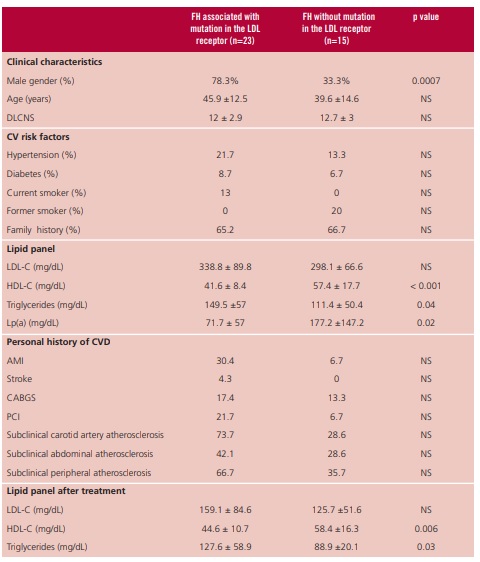
Results: Fifty different variants were identified, 48% of which were considered pathogenic. A genotype-phenotype severity correlation was established in 60.5% of the patients evaluated. The ancestral component of the study population was predominantly European, followed by native-American and African in a lower proportion.
Conclusions: Genetic testing by LDLR gene sequencing in patients identified as “index cases” with clinical diagnosis of familial hypercholesterolemia allows to correlate the genetic information with the severity of the clinical phenotype and to perform a cascade screening of the family members presenting the inclusion criteria considered.
Downloads
Published
Issue
Section
License
Copyright (c) 2025 Argentine Journal of Cardiology

This work is licensed under a Creative Commons Attribution-NonCommercial-ShareAlike 4.0 International License.





