
Blood Pressure Pattern during Sleep-Wake Cycle in Subjects with Metabolic Syndrome
pp. 33-39
DOI:
https://doi.org/10.7775/rac.v80i1.4061Keywords:
Blood Pressure, Metabolic Syndrome, Hypertension, ObesityAbstract
The reduction of nocturnal drop in blood pressure correlates with a higher risk of cardiovascular complications. In addition, the metabolic syndrome (MS) significantly increases cardiovascular risk. We conducted a descriptive, cross-sectional study to evaluate the pattern of nocturnal drop in blood pressure and other parameters provided by 24-hour ambulatory blood pressure monitoring (ABPM), such as mean daytime and nighttime systolic, diastolic and pulse pressures in subjects with MS, and to determine the relation with the components of this syndrome. A total of 125 patients were included, with ABPM reproducibility pattern. Glycemia, HDL-
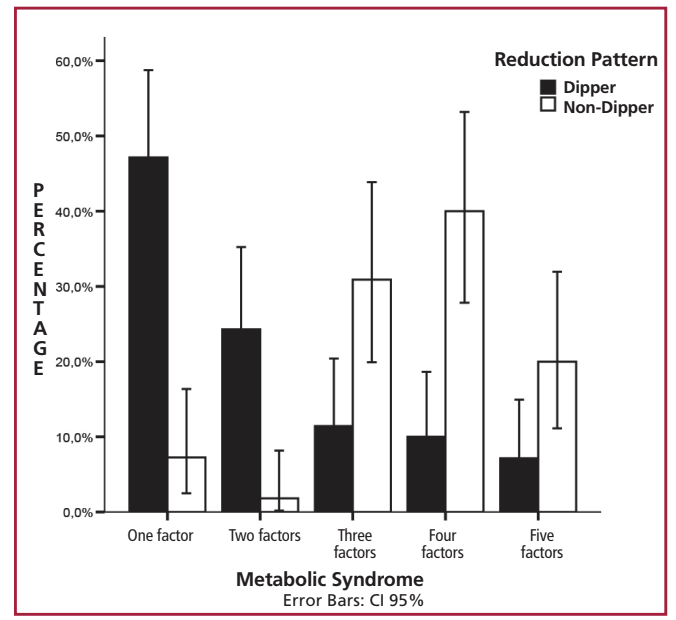
cholesterol, triglycerides, office blood pressure and abdominal circumference were determined. The presence of MS was defined using the ATP III criteria. The global prevalence of hypertension, MS and non-dipper pattern was 43%, 56% and 44%, respectively. Blood pressure values and the percentage of patients with non-dipper pattern were higher in patients with more components of the metabolic syndrome.
The abdominal circumference was the only parameter that predicted the non-dipper pattern. Subjects with MS showed a significant increase in the different blood pressure parameters evaluated by ABPM and a higher prevalence of the non-dipper pattern.
Downloads
Published
Issue
Section
License
Copyright (c) 2026 Argentine Journal of Cardiology

This work is licensed under a Creative Commons Attribution-NonCommercial-ShareAlike 4.0 International License.





