
C-Reactive Protein: a Biomarker Associated with the Metabolic Syndrome and Abdominal Obesity
pp 455-460
DOI:
https://doi.org/10.7775/rac.es.v80.i6.906Keywords:
C-Reactive Protein, Obesity, Inflammation, Cardiovascular diseasesAbstract
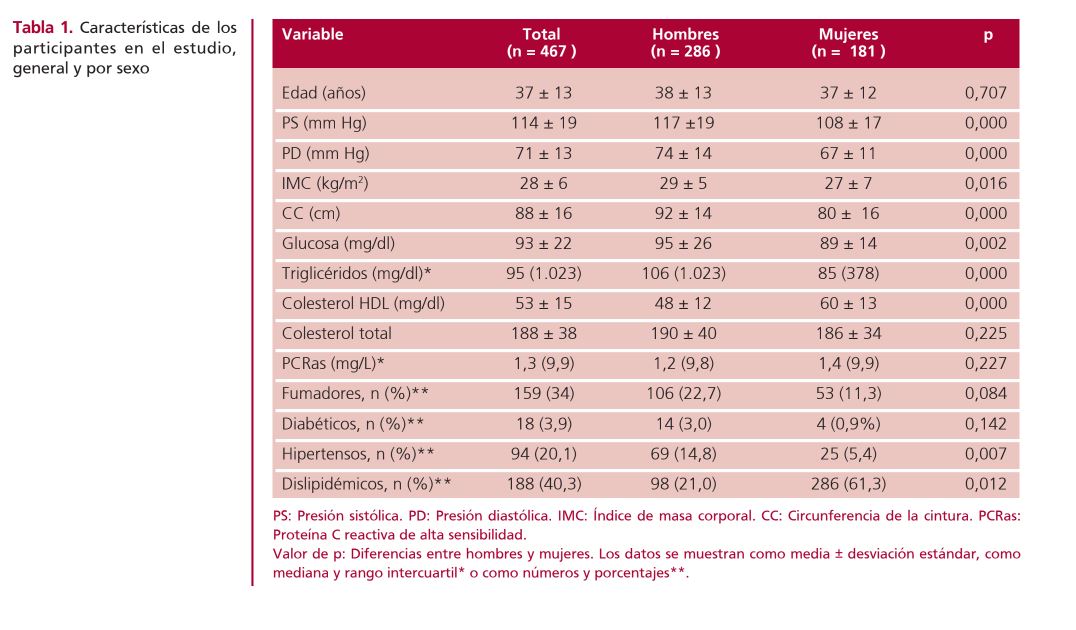
Clinical and biochemical parameters including high sensitivity C-reactive protein of an Argentine population of 467 adult patients from both sexes were evaluated in a cross-sectional study in order to analyze the distribution of high sensitivity C-reactive protein and to study the association of this bio-marker with the metabolic syndrome and its components. The median value of high sensitivity C-reactive protein in the population was of 1.3 mg/L and there were no significant differences between both sexes. Subjects with metabolic syndrome had higher levels of high sensitivity C-reactive protein compared to those without metabolic syndrome, 3.1 and 1.1 (p = 0.000), respectively. Abdominal obesity, low HDL-C levels according to sex and blood pressure ≥ 130/85 mm Hg were independent variables associated with CRP > 3.0 mg/dL (OR 3.0 p = 0,000, OR 2.5 p = 0,000 and OR 2.1 p = 0.005, respectively). After adjusting for confounders, the relative likelihood of presenting high sensitivity C-reactive protein > 3.0 mg/L was 4.8 times greater in subjects with metabolic syndrome compared to those without metabolic syndrome. These results show a strong relation between adipose tissue, cardiovascular disease and inflammation.
Downloads
Published
Issue
Section
License
Copyright (c) 2025 Argentine Journal of Cardiology

This work is licensed under a Creative Commons Attribution-NonCommercial-ShareAlike 4.0 International License.





