
Transseptal Approach for Mitral Valve Replacement
pp 400-404
DOI:
https://doi.org/10.7775/rac.v78i5.1959Keywords:
Surgery, Technique, Mitral Valve, Interatrial Septum, ComplicationsAbstract
Background
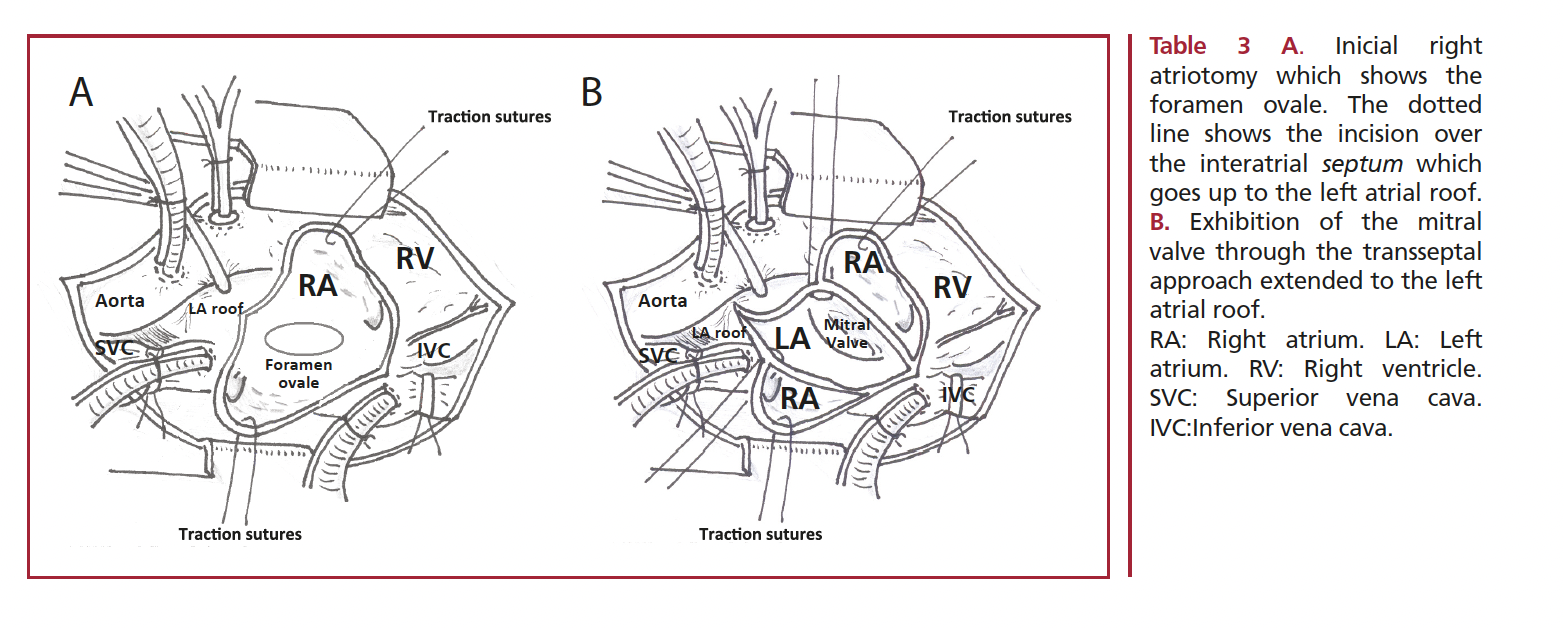
Despite mitral valve replacement through a transseptal approach requires technical expertise, it allows a better exposure of the mitral leaflets and subvalvular apparatus, especially when left atrium is small, during reoperations or in combination with tricuspid valve interventions.
Objectives
To evaluate the technical difficulties and complications associated with the transseptal approach for mitral valve replacement.
Material and Methods
Between 2006 and 2009 we included 62 consecutive patients undergoing isolated mitral valve replacement or associated with myocardial revascularization through a transseptal approach extended to the left atrium roof. Technical difficulties, morbidity and mortality related to the procedure were evaluated.
Results
The procedure did not show technical difficulties and the mitral valve was properly exposed in all cases. Postoperative conduction abnormalities rate was 9.7% and 4.8% of patients required a permanent pacemaker. In patients with preoperative atrial fibrillation (n=18), 83.3% were in sinus or junctional rhythm after the procedure.
Conclusions
The extended transseptal approach provided a better exposure of the mitral valve compared to conventional approach; yet technical expertise is required. The operative times and the incidence of mortality and complications were similar to those of the conventional technique, except for a probable greater incidence of junctional rhythm and AV block. Patients with previous atrial fibrillation may have the benefit of sinus rhythm restoration.
Downloads
Published
Issue
Section
License
Copyright (c) 2025 Argentine Journal of Cardiology

This work is licensed under a Creative Commons Attribution-NonCommercial-ShareAlike 4.0 International License.





