
Cardiotoxicity Alerts during treatment with trastuzumab in Breast Cancer at Four-year Follow-up
pp. 105-110
DOI:
https://doi.org/10.7775/rac.es.v87.i2.13799Keywords:
Cardiotoxicity - Trastuzumab - Breast cancerAbstract
Background: Adjuvant treatment of HER2+ breast cancer includes adriamycin and trastuzumab, a monoclonal antibody that produces cardiotoxicity. The actual epidemiologic impact of trastuzumab-related cardiotoxicity in unselected populations in Argentina
remains unknown.
Objectives: The aim of this study was to evaluate the impact of trastuzumab-related cardiotoxicity during adjuvant treatment for breast cancer in an unselected population after >12 months of completing therapy.
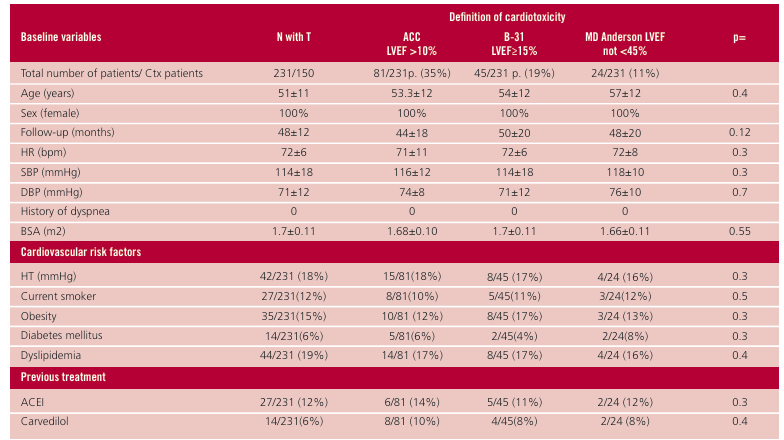
Methods: Among 888 patients prospectively evaluated for breast cancer, 231 (38%) were HER2+ and received adjuvant therapy with adriamycin and trastuzumab. Left ventricular ejection fraction was evaluated before treatment, after completing adriamycin and then every 3 months during follow-up. Cardiotoxicity was defined as a decline in left ventricular ejection fraction >10%, according to the definition of the American College of Cardiology and was compared with the definitions of the B-31 trial and the MD Anderson Cancer Center.
Results: A decline in left ventricular ejection fraction >10% from baseline values occurred in 65% (n=150) of the patients during a mean follow-up of 48±12 months. In the per group analysis, patients included in the B-31and MD Anderson Cancer Center vs. the American College of Cardiology definitions presented greater percent fall in left ventricular ejection fraction during treatment: 20%
vs. 20% vs. 16%, respectively (p <0.04) and ended treatment with left ventricular ejection fraction <50% in 42% vs. 41% vs. 33% of cases, respectively (p=0.01).
Conclusions: In the population treated with trastuzumab under cardio-oncology surveillance during 48±12 months:
1- Left ventricular ejection fraction was significantly decreased in more than 60% of patients.
2- Different guidelines show different cardiotoxicity risks which demands continuous cardio-oncological monitoring.
Downloads
Published
Issue
Section
License
Copyright (c) 2019 Argentine Journal of Cardiology

This work is licensed under a Creative Commons Attribution-NonCommercial-ShareAlike 4.0 International License.





