
Cardiac Fatigue in Ultra-Marathon Runners Measured with Novel Techniques in Echocardiography
pp. 436-441
DOI:
https://doi.org/10.7775/rac.es.v87.i6.16435Keywords:
Ventricular function - Myocardial strain - Athlete’s heart - Cardiac fatigueAbstract
Background: Intense and prolonged physical activity may produce physiological adaptations and acute changes in the cardiovascular system that have been widely analyzed. In this context, some authors state that these acute and transient abnormalities could be attributed to cardiac fatigue.
Objectives: The aim of this study was to analyze the echocardiographic changes observed in participants of ultra-trail or ultra-marathons (footraces on mountain paths longer than 42 km) before and after the race according to the characteristics of the population (sex, age and weekly training load) using echocardiographic measures of myocardial deformation by speckle-tracking technologies.
Methods: Twenty-eight participants were evaluated before and within the first hour after the race) using Doppler-echocardiography and novel echocardiographic techniques with off-line analysis. Five athletes were excluded, two because the endomyocardial border could not be visualized due to poor ultrasound window and three for not completing the race. The statistical analysis was performed
using conventional descriptive statistics and paired Student’s t test was used for comparisons between pre- and post-exertion.
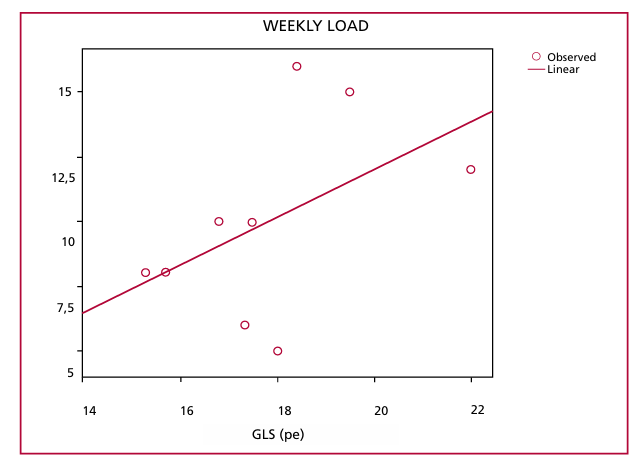
Results: Median patient age was 38±9 years and 65% (n=17) were men. Baseline echocardiography showed normal left and right ventricular function, with mean global longitudinal strain (GLS) of -19% ± -2 and mean right ventricular free wall strain (RVFWS) of -25% ± -3. After the race, there was a significant decrease of ejection fraction, GLS and RVFWS, with a significant increase in right ventricular volume. Ventricular torsion was not affected.
Conclusion: After high-intensity exercise, the changes in the parameters of myocardial deformation measured by speckle-tracking re suggestive of cardiac fatigue induced by exercise.
Downloads
Published
Issue
Section
License
Copyright (c) 2019 Argentine Journal of Cardiology

This work is licensed under a Creative Commons Attribution-NonCommercial-ShareAlike 4.0 International License.





