
Risks of Cardiovascular Disease Patients in Times of COVID-19. A Survey of the Argentine Foundation of Cardiology
pp.212-216
DOI:
https://doi.org/10.7775/rac.es.v88.i3.18019Keywords:
Cardiovascular Diseases - Pandemics - COVID -19 - Pandemics - Social Isolation - Quarantine - Public Health Surveillance - ArgentinaAbstract
Background: The COVID-19 pandemic led to the implementation of massive lockdown measures producing a reduction in consulta tions, diagnostic tests, treatments and admissions for cardiovascular and cerebrovascular events and cancer.
Objective: The aim of this study was to determine the access to medical care and health care information in patients with cardiovascular diseases during social, preventive, and mandatory confinement in Argentina.
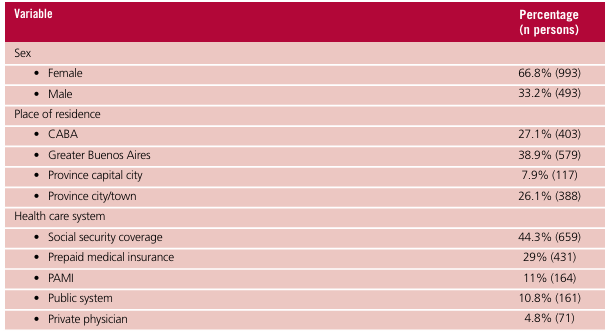
Results: A total of 1,487 surveys were analyzed. Mean age was 56.17 ± 14.0 years; 66.8% of survey respondents were women, 38.9% lived in the Greater Buenos Aires area and 27.1 % in the Autonomous City of Buenos Aires. The most commonly reported main cardiovascular disease was hypertension (52.1%); 42% required medical care and 57.9% could not access to consultation due to is sues related with the health system in 68.2% of cases. Only 16.4% did not request medical care for fear of becoming infected with COVID-19. Seventy-two percent required prescriptions and 13% did not obtain them. Access to vaccination was normal in 41.4% of respondents. Social mandatory isolation was respected in 92.4% of cases. Finally, 54.6% of the surveyed population felt unprotected by the health system.
Conclusions: We believe that access of the population with chronic cardiovascular diseases to the health system should be warranted in order to adapt monitoring and minimize hospitalization due to decompensation in this high-risk population.
Downloads
Published
Issue
Section
License
Copyright (c) 2020 Argentine Journal of Cardiology

This work is licensed under a Creative Commons Attribution-NonCommercial-ShareAlike 4.0 International License.





