
Psychosocial Impact of the COVID-19 Pandemic on the Adult Population of Buenos Aires
pp. 437-442
DOI:
https://doi.org/10.7775/rac.es.v88.i5.18857Keywords:
Coronavirus Infection / Psychology - Social isolation - Mental Health - Healthy Lifestyle - Anxiety - Depressive DisorderAbstract
Background: In March 2020 the World Health Organization (WHO) declared the SARS-CoV-2 coronavirus a pandemic, and since then a remarkably large psychological experiment has been carried out in the world: social isolation.
Objectives: The aim of this study was to analyze the impact of social isolation on healthy habits and some psychosocial and behavioral aspects during the confinement and restrictions imposed by the pandemic in the metropolitan area of Buenos Aires (AMBA).
Methods: An anonymous survey, excluding medical personnel, was carried out through social networks (WhatsApp, Instagram, Facebook and e-mail).
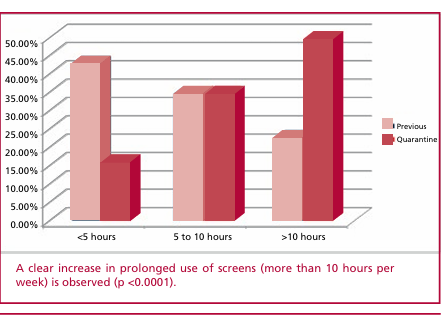
Results: After 7 days of sending the link 2,912 people had answered the survey. Age was between 40 and 60 years in 48.2% of participants, with a predominance of women. In 43.53% of cases, respondents perceived changes in their lifestyle, such as a twofold increase of hours in front of electronic devices during quarantine. This was accompanied by a more sedentary lifestyle, since 83.5% exercised before the pandemic but only 6.4% maintained the prior hours of weekly physical activity. Altered eating habits was reported by 43.52% of participants and 41% referred symptoms compatible with depression, anxiety, sadness, reluctance or hopelessness.
Conclusions: Our study suggests that psychological wellbeing and healthy habits are threatened by confinement in the face of the COVID-19 pandemic, so it is necessary to implement measures to prevent consequences in our population.
Downloads
Published
Issue
Section
License
Copyright (c) 2020 Argentine Journal of Cardiology

This work is licensed under a Creative Commons Attribution-NonCommercial-ShareAlike 4.0 International License.





