Results of the First SAC Implantable Cardioverter-Defibrillator and Cardiac Resynchronization Therapy Registry (RENCARE)
pp. 415-419
DOI:
https://doi.org/10.7775/rac.v88i5.637Keywords:
Defibrillators, Implantable - Cardiac Resynchronization Therapy Devices – Registries – Sudden, Death – Heart FailureAbstract
Background: Prevention of sudden death and treatment of heart failure are very important topics. Implantable cardioverter-defibrillator and cardiac resynchronization devices are used to prevent sudden death and improve heart failure symptoms and prognosis.
Objectives: The aim of this study was to evaluate the number, type of implanted devices, clinical characteristics of the patients and acute and follow-up complications.
Methods: An observational, prospective, multicenter study was carried out in healthcare centers with the capacity to implant car
dioverter-defibrillator and cardiac resynchronization devices. The study included all patients who underwent implantation of these devices from January 2016 to January 2017, with a 12-month follow-up.
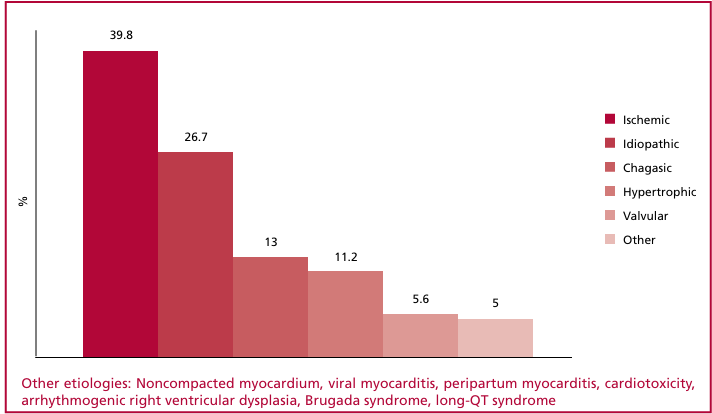
Results: A total of 249 patients (73.9% men) with mean age of 64.8±13.7 years, and 72.1% with ejection fraction <35%, were included in the study. The underlying cardiomyopathy etiology was ischemic in 39.8% of cases, dilated in 26.7% and chagasic in 11.2%.
Fifty-eight percent of implants were implantable cardioverter-defibrillators and 39% were cardioverter-defibrillators associated with
cardiac resynchronization devices. In 84% of cases, procedures were first implants. The most frequent indication of implantation was for primary prevention of sudden death (67.9%). Minor complication rate was 4.4% and no major complications were reported.
Conclusions: The present registry evidenced a large proportion of cardioverter-defibrillator and cardiac resynchronization implants in patients with ischemic heart disease. The main indication was for primary prevention of sudden death and the complication rate was similar to that reported internationally.
Downloads
Published
Issue
Section
License
Copyright (c) 2020 Argentine Journal of Cardiology

This work is licensed under a Creative Commons Attribution-NonCommercial-ShareAlike 4.0 International License.