
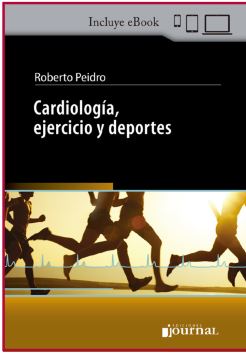
“Cardiología, ejercicio y deportes” Author: Roberto Peidro
pp 259
DOI:
https://doi.org/10.7775/rac.es.v89.i3.20405Abstract
We don’t stop exercising because we age; we age because we stop exercising. KENNETH COOPER Roberto Peidro is undoubtedly recognized as a true national and international reference in Sports Cardiology. He has practiced and still practices competitive sports and clinical cardiology with great and unparalleled enthusiasm. On the other hand, he has a remarkable teaching ability to expose and write on these topics which he masters with vast authority. In 1996, Dr. Peidro published his first book: Medicine, Exercise and Sports, in which, throughout its 650 pages, he comprehensively addressed the most relevant aspects of this discipline. At the end of this quarter of a century, he considered it necessary to update many concepts of this new and growing subspecialty that integrates Cardiology with Sports Medicine.
The new book: Cardiology, Exercise and Sports, has 32 chapters organized into five sections. In addition to the numerous chapters he personally wrote, Roberto summoned thirty co-authors, experts in the most varied aspects related to this discipline. The first section refers to exercise and cardiovascular health with topics concerning exercise physiology, energy metabolism and muscle biomechanics, diagnostic methods and the role of imaging studies, the value of exercise in the prevention and treatment of ischemic heart disease, heart failure, peripheral arterial disease, obesity or bronchopulmonary diseases, the risks of sedentary lifestyle and the benefits of physical activity (considering that in Argentina more than 50% of the inhabitants are sedentaryas well as guidelines for the prescription of physical activity in the healthy and sick population. The second section discusses the athlete’s heart, arrhythmias and sudden death during sports practice, hypertrophic cardiomyopathy and channelopathies. The third section addresses the sports characteristics in different ages and situations, such as altitude, immersion or extreme temperatures. The fourth section provides recommendations for preparticipation tests in the general community or precompetitive tests in high performance athletes, their training and nutrition guidelines. The last section focuses on novel topics, such as sports and neurosciences or COVID-19 and sports.
In conclusion, this book offers us an in-depth and updated analysis of this subspecialty and answers multiple questions and theoretical and practical issues related to it. Sports cardiology growth and expansion has been permanent and most of it has been registered in the last decades. The significance it is achieving is demonstrated by the fact that the search in Pubmed for the term “Sports Cardiology” in July 2021 presents 6019 citations, 3248 of which correspond to the last 5 years.
It is a work of extreme usefulness for Cardiology residents, cardiologists, clinical doctors, athletes, physiologists, physiotherapists, nutritionists and physical education professors, among others. Readers will undoubtedly enjoy this book, which updates from the classic to the newest in this fascinating discipline.
Downloads
Published
Issue
Section
License
Copyright (c) 2025 Argentine Journal of Cardiology

This work is licensed under a Creative Commons Attribution-NonCommercial-ShareAlike 4.0 International License.





