Arterial switch. Mid-term follow up, eleven years of experience
pp 107-111
DOI:
https://doi.org/10.7775/rac.v73i2.3928Keywords:
Congenital heart disease, Cardiovascular surgical procedures/nursery, Transposition of the great vessels, Follow up studiesAbstract
Work objective
To evaluate the short and mid-term outcome after arterial switch operation in infants with transposition of the great arteries (TGA).
Research Design and Methods
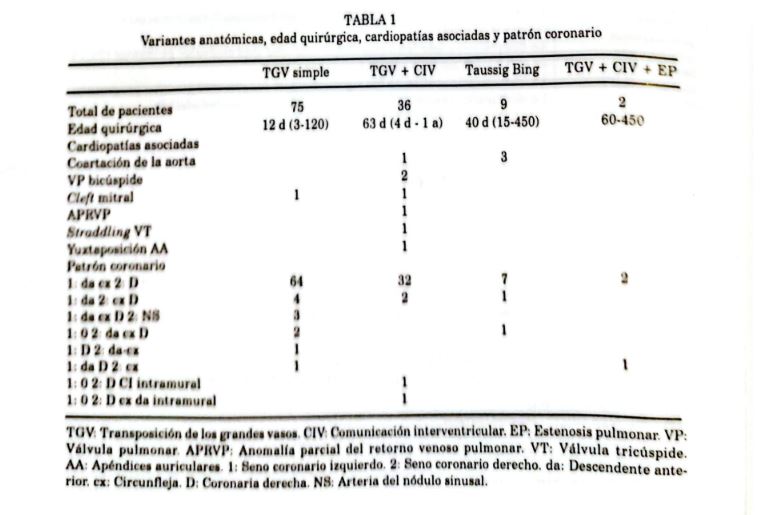
Between 1992-2003, 122 patients were discharged from hospital after an arterial switch operation. One hundred and one patients were followed-up between 6 months and 11 years, median: 4 years. Morphologic features: Simple TGA: 75; TGA and VSD: 36; Taussing-Bing anomaly: 9; TGA + VSD and pulmonary stenosis: 2; an anatomic variant from the usual coronary artery pattern was noted in 17 patients (13.9%).
Results
All survivors remained in NHYA funcional class I. Supravalvular pulmonary stenosis was detected in 25 children (24.7%), considered severe in 10 (9.9%). Nine of these underwent surgery to relieve the pulmonary obstruction. A pulmonary angioplasty was later required in 2 patients. It was successful in one. Mild to moderate aortic incompetence was found in 2 patients (1.9%). It did no progress. Some degree of coronary artery obstruction was documented in 3 patients. Left ventricular systolic function remained whithin normal limits in all. One patient died as a result to a left coronary artery kinking, clearly shown on the previous angiogram.
Conclusions:
The short and mid-term evolution after the arterial switch operation for TGA is excellent with a survival rate of 99% up to 11 years of follow-up. Ninety nine percent of survivors remain in NYHA functional class I, keep on sinus rhythm and have a normal left ventricular systolic function. The most frequent complication was supravalvular pulmonary stenosis (24.7%), severe in only 8.9% and required treatment. Aortic incompetence was not important and did not progress. The only cause of late mortality was coronary artery obstruction.
Downloads
Published
Issue
Section
License
Copyright (c) 2026 Argentine Journal of Cardiology

This work is licensed under a Creative Commons Attribution-NonCommercial-ShareAlike 4.0 International License.