
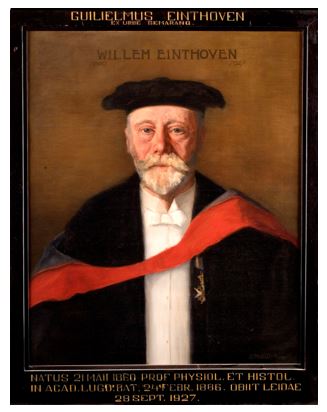
A Century after Willem Einthoven's Nobel Prize (1860-1927) and the Development of Electrocardiography
pp. 305-308
DOI:
https://doi.org/10.7775/rac.es.v92.i4.20801Keywords:
Willem Einthoven, galvanómetro de cuerda, electrocardiografía, historia de la medicinaAbstract
One hundred years after the Nobel Prize in Physiology or Medicine was awarded to Willem Einthoven for his invention of the string galvanometer, currently known as the electrocardiograph, it remains the most commonly used diagnostic tool for the evaluation of conduction disorders and ischemic disease, since it is reliable, non-invasive and low cost. The life of such a notable Dutch doctor and physiologist, and part of the history that concluded with the definitive establishment of the device and the birth of clinical electrocardiography are reviewed.
How to cite this article:
Ampuero Acuña C, Donoso Fuentes A. A Century after Willem Einthoven's Nobel Prize (1860-1927) and the Development of Electrocardiography. Rev Argent Cardiol 2024;92:305-308. http://dx.doi.org/10.7775/rac.v92.i4.20801
Downloads
Published
Issue
Section
License
Copyright (c) 2024 Argentine Journal of Cardiology

This work is licensed under a Creative Commons Attribution-NonCommercial-ShareAlike 4.0 International License.





