
Electrophysiologic Studies and the Identification of the Atrial Tachycardia
pp 479-482
DOI:
https://doi.org/10.7775/rac.v61i5.3526Abstract
A 20 year-old female patient was referred for control of symptomatic refractory "sinus tachycardia" that had been diagnosed when she was 3 years old. A reduction in heart rate had been obtained with the combination of atenolol and digoxin (from 140-160 beats/min pretreatment- to 100-120 beats/min). TheP wave configuration in the electrocardiogram was consistent with a "sinus" origin of the tachycardia. There was minimal heart rate variability in the 24-hour Holter recording. The electrophysiologic study showed normal conduction intervals. The right atrium was mapped comparing the local electrograms with the timing of activation recorded with a reference electrode positioned in the sinus node region. The earliest electro-gram was at the distal portion of the right atrial appendage. There was resetting of the tachycardia after single atrial extra stimuli and minimal suppression following overdrive pacing. There was no conversion to sinus rhythm during atrial stimulation. These features were consistent with an automatic mechanism. Due to the refractoriness to medical therapy, resection of the right atrial appendage was carried out, with recovery of sinus rhythm and absence of symptoms. Although this arrhythmia is rarely observed, this case illustrates the limitations of the surface ECG and shows how the electrophysiologic assessment allowed the identification of the mechanism and site of origin of the arrhythmia, as well as its surgical cure.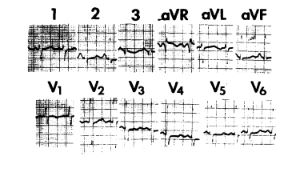
Downloads
Published
2026-04-07
Issue
Section
ORIGINAL ARTICLES
License
Copyright (c) 2026 Argentine Journal of Cardiology

This work is licensed under a Creative Commons Attribution-NonCommercial-ShareAlike 4.0 International License.





