
Treatment of type IIa hypercholesterolemia with lovastatin
pp 222-228
DOI:
https://doi.org/10.7775/rac.v58i5.3387Abstract
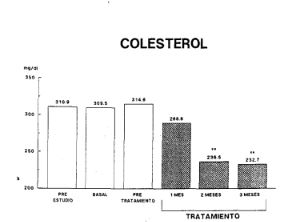
Lovastatine was administered to fifteen patients suffering primary hypercholesterolemia type II, who did not respond to the diet. After a four week-period receiving placebo, they were treated with 20 to 80 mg/day given twice a day during three months. There were 2 males and 13 females and their ages ranged between 22 and 71 years old. Clinical and oftalmological examinations were carried out and the following laboratory test were pe~formed: total cholesterol (TC), HDL-C, LDL-C, triglycerides, hemogram, glucose, uraemic, uric acid, hepatogram and CPK. All the samples were taken after 12 hours fasting. The TC significantly decreased (p < 0.01) in 13 patients after 2 months of treatment and its level was still lower at the end of the third month. The LDL-C level significantly disminished over the whole treat- ment period (p < 0.01). The medium rale TC/HDL-C was decreased to values under 4.5 during the treatment (p < 0.01). There were no significant differences among HDL-C levels. Triglycerides values were significant lower after three months of therapy than at the beginning (p < 0.01). Neither vital signs non corporal weight showed variations; side effects were all reversibles, and there were no alterations shown by the oftalmological study after the three month treatment period. No hematological, hepatic or kidney alterations could be found by the laboratory tests. The principal drug effect was its action on the LDL-C. It was well tolerated and no important side effects were seen during the treatment period. It can be concluded that lovastatin is an effective drug in the treatment of primary cholesterolemia type IIa.
Downloads
Published
Issue
Section
License
Copyright (c) 2026 Argentine Journal of Cardiology

This work is licensed under a Creative Commons Attribution-NonCommercial-ShareAlike 4.0 International License.





