
Post-acute myocardial infarction angina
pp 379-384
DOI:
https://doi.org/10.7775/rac.v60i4.3316Abstract
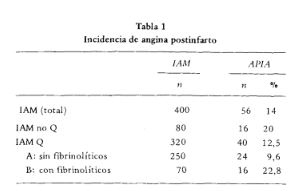
In order to determine the incidence of postinfarction angina 400 patients with infarction were analyzed prospectly and consecutively in a first trial. In addition, one hundred and ten patients were also analyzed to study the fisiopathological mechanism of early post- infarction angina, in a second trial. Postinfarction angina was defined as angor starting between 24 hours and 15 days after infarction, at rest, with transient electrocardiographic changes, and no enzimatic elevation. In order to analyze the postinfarction angina, patients's previous clinical condition, ischemic location; type of infarction, treatment and coronary angiography, were taken into account. In the first trial, more incidence of postinfarction angina was found, in patients treated with thrombolytics, the no Q infarction group and patients with long term coronary symptoms. The global incidence of postinfarction angina was 14 %. In the second trial, two groups were established: a) patients with no previous angina, or less than 7 days evolution, mostly developing local ischemia, with ST- T segment elevation and one vessel disease still patent; b) patients with long term angina, mostly developing distant ischemia, with ST- T segment depression, multivessel disease, complete occlusion of the infarct related vessel and development of collateral channels.
Downloads
Published
Issue
Section
License
Copyright (c) 2026 Argentine Journal of Cardiology

This work is licensed under a Creative Commons Attribution-NonCommercial-ShareAlike 4.0 International License.





