
The Importance of a Multidisciplinary Evaluation in Patients with Syncope
pp 165-168
DOI:
https://doi.org/10.7775/rac.v61i2.3295Abstract
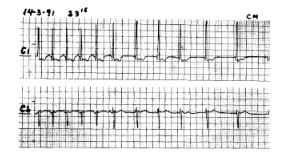
Syncope are very frequent cause to consultation, and the ethiologic diagnosis is, often, a challenge for the physician. In this paper we describe two patients with syncope, one of them with symptomatic bradycardia ending in the implant of a definitive pacemaker, and the other carrier of an auricular rate responsive pacemaker (AAIR), implanted for apparent sick sinus syndrome (SSS). Both were studied with: clinical history, electrocardiogram (ECG) at rest and dinamics (Holter), transesophagic overstimulation, electroencephalogram (EEG), cranium axial computer tomography, polygraphic studies with simultaneous EEG and ECG with photostimulation, hyperventilation and sleeping deprivation trial; only Holter's studies shown asymptomatic bradycardia (low rate 50 and 45 bpm, respectively without correlation between them and the symptoms. Other studies were normals. In the neurologic's trial we reproduced the syncopal's states without alterations in the arterial pressure, heart rate and rhythm and EEG. During the hospital stay, the patients had syncope, also without unvernesse of the pulse and arterial pressure. Psychiatrics evaluation were made. Both patients shown psychiatrics disease. Patient one: schizophrenia. Patient two: delirious psychosis. They were treated with neuroleptic's drugs (haloperidol, chloropromazine and biperideno, and haloperidol, trifluorchloropromazine respectively), with total remission of the syncope, till one an done half year of follow-up. We emphasize the multi-disciplinary study in patients with syncope, who don't have clear ethiology or haven't had correlation between symptoms and studie's abnormalities.
Downloads
Published
Issue
Section
License
Copyright (c) 2026 Argentine Journal of Cardiology

This work is licensed under a Creative Commons Attribution-NonCommercial-ShareAlike 4.0 International License.





