
Long-term sinus rhythm preservation with amiodarone in atrial fibrillation
pp 77-82
DOI:
https://doi.org/10.7775/rac.v62i1.3220Keywords:
Fibrilación auricular, Amiodarona, Recurrencia fibrilación auricularAbstract
Background and objectives
Synus rhythm preservation in patients with paroxystic or permanent atrial fibrillation is clinically relevant . The class I antiarrhythmic drugs have not reached desirable levels of efficacy and, in some trials, it has been shown that these drugs may be potentially dangerous, even in absence of severe cardiopathy. The aim of our study was to evaluate the efficacyof oral amiodarone in maintaining sinus rhythm after spontaneous, electrical or pharmacological reversion of permanent or paroxystic atrial fibrillation .
Methods and results
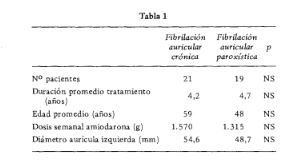
We studied 40 patients with atrial fibrillation, 18 men and 22 women, with a mean age of 53 years (range 17 to 86). In 21 patients the arrhythmia was chronic and in 19 it was paroxystic. The average size of left atrium was 52 mm (range 32 to 72): less than 40 mm in 6 % of the cases, between 40 and 49 mm in 38 %, between 50 and 59 mm in 34 % and more than 60 mm in 22 %. For the first 30 days the patients received between 400 and 600 mg of amiodarone daily, and thereafter they received 1000 mg weekly. In case of relapse the dose of amiodarone was increased to 2000 mg weekly. Patients were followed for an average of 4.4years (range 1 to 14) . Twenty-six patients (65 %) maintained sinus rhythm at last control visit. Eleven of them had had one or more repeat episodes of atrial fibrillation. In the 14 patients who presented atrial fibrillation at last control visit, sinus rhythm had been present for long periods of time. Among the 25 patients who relapsed, 43 episodes of atrial fibrillation were detected, 19 of which could be related either to treatment reduction or discontinuation. Sinus rhythm was maintained in 97 .5 %, 92 % and 74 % of the patients at the end of 1, 2 and 5 years, respectively . Side effects were observed in only 7 patients (17 .5 %), three required discontinuation of treatment.
Conclusions
Our results show that amiodarone allows maintenance of sinus rhythm for a prolonged period of time in patients with previous chronic or paroxystic atrial fibrillation, even in the presence of adverse conditions as is a much enlarged left atrium.
Downloads
Published
Issue
Section
License
Copyright (c) 2026 Argentine Journal of Cardiology

This work is licensed under a Creative Commons Attribution-NonCommercial-ShareAlike 4.0 International License.





