
Lipid profile of an essential hypertensive population. Differences with a general population
pp 72-80
DOI:
https://doi.org/10.7775/rac.v61i1.3176Abstract
In order to compare the lipid profile of an essential hypertensive population with that of a normal population, 362 essential, non complicated hypertensives (group H) and 361 normal individuals (group G) were submitted to clinical (blood pressure, body weight and height measurements) and laboratory (plasmatic cholesterol, HDL-cholesterol, triglycerides and glucose) exams. Group H was composed of 193 men (49.9 = 11.2 years old) and 169 females (52.9±11.0 years old); they were mild (220 patients), moderate (99 patients) and severe (43 patients) hypertensives. Group G comprised 181 men (43.1 ± 8.7 years old) and 180 females (44.0± 8.8 years old). There were no significant sex differences concerning to blood pressure, and plasma cholesterol or glucose levels in group H.On the other hand, there were significant differences in bodyweight(81.0 ± 12.8 vs 70.6 ± 11.9 kg; p < 0.01). More than 50 % of them showed a trend towards obesity (body mass index> 27kg/m2), HDL cholesterol (47.3 ±10.3vs.56.2 ± 12.5 mg; p< 0.0001) and triglycerides levels (169.0±90.5 vs 131.0±52.5 mg°l,; p<0.0001). The cholesterol/HDL-cholesterol ratio (atherogenic index) was higher in males (4.80 ± 1.38vs4.24 ±1.15;p<0.001). Lineal multiple regression analysis showed a significant influence of sex, body weight (inverse relationship) ant to a lesser degree, of body mass index and triglycerides over HDL-cholesterol levels. Age was associated with systolic blood pressure and plasmatic cholesterol levels as well as body weight, and related to diastolic pressure. Glucose blood levels were related to systolic blood pressure. Blood pressure was normal in group G, men and women; these levels were lower in females. Body weight was higher in men (7.90 ± 10.5vs 66.4±12.1 kg), HDL-cholesterol levels were higher in normotensive men, though gender differences were present. The group G atherogenic index was definitely lower than in hypertensive men and women (4.28 ± 1.18 vs 3.81±1.10, respectively). The alterations in the lipid profile of essential hypertensives, specially in males, associated to a tendency to overweight, could explain the higher incidence of vascular events seen in hypertensives. Its treatment must take into account the correction of the metabolic alterations for the prevention of vascular complications.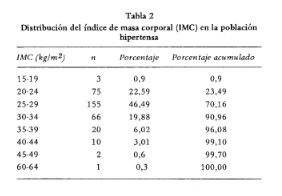
Downloads
Published
2026-04-09
Issue
Section
ORIGINAL ARTICLES
License
Copyright (c) 2026 Argentine Journal of Cardiology

This work is licensed under a Creative Commons Attribution-NonCommercial-ShareAlike 4.0 International License.





