
Insulin Resistance Index and Metabolic Syndrome in a Population of Southern Argentina
pp 671-681
DOI:
https://doi.org/10.7775/rac.v68i5.3046Keywords:
Metabolic syndrome, Insulin resistant patients, Cardiovascular risk factors, Age, Central obesity, Sedentary life styleAbstract
Objective
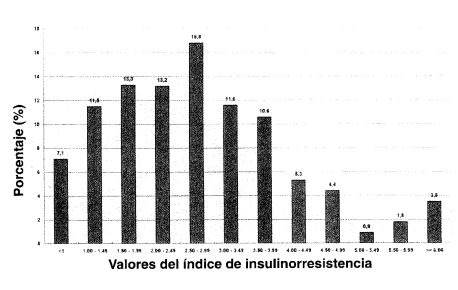
To determine the prevailing insulin resistance index(IR)values, predictors and frequency of metabolic syndrome (MS)in a group of the local population in our region.
Methods
The study was performed on 135 civil servants and retired individuals, 68 males and 67 females of 51± 7 and 53 ± 7 years old respectively. Total cholesterol (TC), HDL-c, triglycerides (TG), a polipoprotein B, uric acid, glucose, and fibrinogen were determined in all of them. Insulin and IR were obtained in 113 individuals.
Results
Average IR values were 2.8 ± 1.6. Differences found between individuals with hypertension or using antihypertension drugs (AHT) and those with normal blood pressure were: mean age 57 ± 7 vs. 50 ± 7(p = 0.00001), TC >_ 240 mg/dl, 31.9% vs. 17.5% (p =0.05); HDL-c < 35 mg/dl in males or HDL-c < 45 in females, 16.7% and 4.8% (p = 0.028); TG > 200 mg/dl, 22.2% vs. 6.3% (p = 0.009); central obesity(CO), 48.6% vs. 25.0% (p = 0.005); insulin > 14 mlU/ml, 36.7% vs. 13.2% (p = 0.004) respectively. MS was defined by the requirement of AHT or treated plusIR> 3.1 and TG/C-HDL > 3.5 in males or > 2.4 in females. Multiple logistic regression analysis showed that the best MS predictors were CO, older age and sedentary life. The prevalence of MS in the whole population studied was 12.6%, and when the analysis was performed according to sex, it turned out to be 12.7% in males vs. 11.1% in females (ns); 23.3% with CO vs. 6.3% without it (p = 0.006). Prevalence of MS considering age resulted of 18.1% in patients older than 52 years old vs. 3.7% in younger ones (p = 0.014); 21.7% in sedentary subjects vs. 6.3% in active people (p = 0.0097).
Conclusions
IR "cut off" point was 3.1. The prevalence of MS in the population studied was 12.6% and was higher in people with CO (23.3%), individuals older than 52 years old (18.1%) and with sedentary life style (21.7%). The results suggest the importance of the detection of MS diagnosis to correct or modify the cardiovascular risk factors.
Downloads
Published
Issue
Section
License
Copyright (c) 2026 Argentine Journal of Cardiology

This work is licensed under a Creative Commons Attribution-NonCommercial-ShareAlike 4.0 International License.





