Echocardiographic Evaluation of Left Ventricular Mass in Young Hypertensive and/or Obese Patients
pp 616-622
DOI:
https://doi.org/10.7775/rac.v69i6.3018Keywords:
Echocardiogram, Left ventricular mass, Left ventricular hypertrophy , Young people , High blood pressure, ObesityAbstract
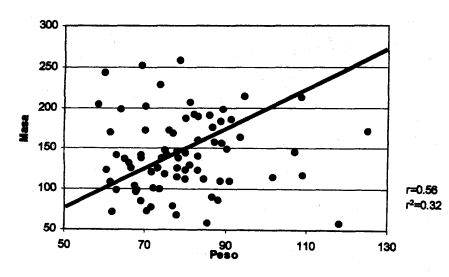
Left ventricular hypertrophy (LVH) represents a substantial risk of morbidity and mortality. In order to detect changes of left ventricular mass (LVM)related with blood pressure (BP) and body mass index (BMI) increments in young people, we evaluated 938 students between 18 and 25 years. Height, weight, systolic (SBP) and diastolic (DBP) blood pressure were measured, and 112 echocardiograms were performed. We divided the whole population in four groups: control (group I), slim hypertensives (group II), obese normo tensives (group III)and obese hypertensives (group IV). The strongest independent relationships of LVM in males were with weight (r = 0.62, r2=0.39), body surface (r= 0.60,r2=0.36), BMI (r=0.59, r2=0.35), and, to a lesser extent with height (r = 0.25,r2=0.06) andSBP (r = 0.25, r2=0.06). In females LVM was re-lated to SBP (r = 0.54, r2=0.29), mean BP (r=0.54, r2= 0.29), DBP (r = 0.52, r2=0.27) and pulse pressure(r= 0.40, r2= 0.16). In males, LVM (p<0.01), mass/height ratio (p<0.01) and left ventricular mass index (LVMI) (p=0.02) increased from group I to IV.In females, LVM (p= 0.04), mass/height ratio (p=0.04) and LVMI (p=0.13) were higher in group II (slim hypertensives). It was also seen that LVM is higher in males; the prevalence of LVH varied be-tween 0.0% and 8.9% according to the cut point selected to define it and the chosen formula. In males, LVM increased with hypertension, obesity and the association of both pathologies, but in females LVM it was increased only in presence of hypertension.
Downloads
Published
Issue
Section
License
Copyright (c) 2026 Argentine Journal of Cardiology

This work is licensed under a Creative Commons Attribution-NonCommercial-ShareAlike 4.0 International License.