Cardiorespiratory rehabilitation in pulmonary hypertension: experience in a reference center
pp. 253-260
DOI:
https://doi.org/10.7775/rac.v90i4.30Keywords:
Pulmonary hypertension - Cardiac rehabilitation - Six-minute walk test - Quality of lifeAbstract
Background: Pulmonary hypertension (PH) comprises a heterogeneous group of diseases resulting in disability and increased morbidity and mortality. Cardiopulmonary rehabilitation (CR) is a therapeutic resource not widely used in this condition.
Objective: The aim of this study was to evaluate the effects of a CR program on a walking test and on the quality of life in patients with group 1 and group 4 PH
Methods: Patients were evaluated before and after the intervention with the six-minute walk test (6MWT) and Saint George’s Respiratory Questionnaire (SGRQ). The program consisted of 8 weeks of supervised exercises within the institution.
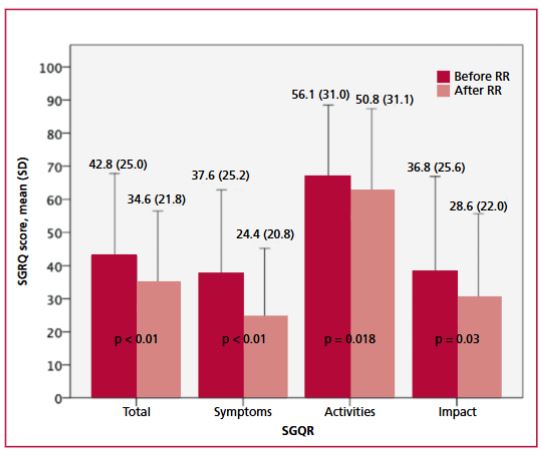
Results: Nineteen patients with precapillary PH diagnosed by right heart catheterization were included; 18 were women (94.7%) with a mean age of 45.5±14.3 years. Thirteen (68.4%) patients had group 1 PH and 6 (31.6%) had group 4 PH. There were statistically significant changes in the 6MWT [mean difference (MD) 31±27.3 m; p<0.001], and in the SGRQ (MD 8.2±10.2;
p<0.01). No adverse events were reported during the program.
Conclusions: Our study suggests that a supervised CR program in patients with PH could improve the distance walked and the quality of life.
How to cite this article:
Lardiés J, Litewka DF, Andreu MF, Gandino IJ, Morelli ME, Navarro B, et al. Cardiopulmonary Rehabilitation in Pulmonary Hypertension: Experience in a Referral Center. Rev Argent Cardiol 2022;90:253-60. http://dx.doi.org/10.7775/rac.v90.i4.20537