Preoperatory (prophylactic) employment of counter pulsation intraortic balloon
pp 102-108
DOI:
https://doi.org/10.7775/rac.v71i2.2954Keywords:
Intraaortic balloon , Cardiac Surgery , Assisted circulationAbstract
Introduction In the last few years, several studies have proposed theemployment of the preoperatory counterpulsation intraorticballoon procedure. Most of these analyses are retrospectiveor were performed with patients of just one medical center;they generally include populations of patients with thera-peutic indications of the device (refractory angina). Objective To assess the usefulness of the preoperatory (prophylactic)employment of the balloon considering: a) mortality b) lowcardiac output syndrome, and c) complications associatedto the device. Material and Methods All cardiac surgeries performed between 05/01/99 and 02/01/02, with extracorporeal circulation, were included. Thosepatients who had two of the following variables: severe ven-tricular dysfunction, severe left main lesion, reoperation,diffuse coronary anatomy; or age over 75 years, were de-fined as high risk patients, being randomized to preoperatoryballoon employment, in intra or postoperatory. Patients withtherapeutic indications were excluded. A p value less than0.05 was considered significant. Results Two hundred and twenty-three patients fulfilled the high risk criteria being randomized to pre operatory balloon (111p) as a difference to its indication in the intra or postoperatory period (112 p; Control group). The overall mortality in the group was of 25 patients (11.2%) 8 being patients of the preoperatory group (7.2%) against 17 of the control group (15.2%; p = 0.05); showing also a lower incidence of preoperatory low cardiac output; 11 p (9.9%) against27 patients (24.1%; p = 0.004). Seven complications associ-ated to the device were seen (3.1%), member ischemia in 5cases, and two local infections on the vascular access. There were no deaths associated to the device. Conclusions 1) The employment of preoperatory balloon was associatedto mortality reduction and lower incidence of low cardiacperioperatory output; 2) the incidence of complications waslow, appearing only in 7 patients (3.1%)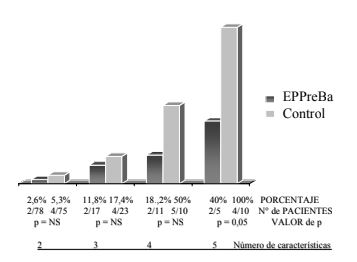
Downloads
Published
2026-02-24
Issue
Section
ORIGINAL ARTICLES
License
Copyright (c) 2026 Argentine Journal of Cardiology

This work is licensed under a Creative Commons Attribution-NonCommercial-ShareAlike 4.0 International License.