
Distintas variables hemodinámicas determinan la amplitud de las ondas de llenado mitral y de las propagadas al tracto de salida
pp 48-53
DOI:
https://doi.org/10.7775/rac.v71i1.2894Keywords:
Echocardiography, Echo-Doppler function, Systolic functionAbstract
Objective
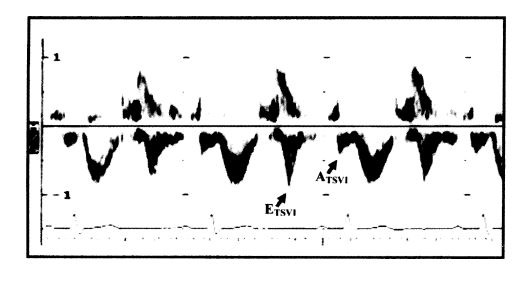
To identify the physiologic variables influencing the velocities of the early (E) and late (A) transmitral diastolic waves, as well as the waves transmitted to the left ventricular out flow tract (ETsvi y ATSVI).
Methods
We included 49 patients (30 women), 64±18 years of age. The following Doppler parameters were measured: velocities of E, A, ETsvi and ASVI' as well as the decrease of E and A velocities into the left ventricular outflow tract (ETSv/E y sv/A). The selected diastolic function properties evaluated were: E velocity propagation (Vp), left atrial pressure (PAI=5.27ENp+4.66), left ventricular (VI) stiffness constant (¾=(0.07/E deceleration time[TD])2) and end diastolic VI pressure (PFDVI= 46-0.22TD-0.10[2/(E/A)]), and as systolic function properties the fiber stress (SF) and a shear index unction properties the fiber stress (SF) and a shear index ([In(h0/h)] at the beginning (c-e) and end (f-e) of the VI ejection.
Results
In the multiple regression multivariate analysis, the following variables resulted independent predictors: 1) Vp only for ETSVI' 2) KVI for E, ETsvr, ATsvi and ETSv/E, 3) PFDVI for E, A and ETsvI' 4) [In(h0/h)](c-e) for ATsvi and Asv/A, and finally 5) [In(h0/h)](f-e) only for ATsv'/A. None of the Doppler parameters appeared to depend on SF.
Conclusions
E, A and ETSVIwaves are determined only by diastolic VI properties. On the other hand, ATSVI depends on both systolic and diastolic variables, ETSVI/E on diastolic ones and ATSVI/A on systolic properties exclusively.
Downloads
Published
Issue
Section
License
Copyright (c) 2026 Argentine Journal of Cardiology

This work is licensed under a Creative Commons Attribution-NonCommercial-ShareAlike 4.0 International License.





