Acute Myocardial Infarction in Women in Argentina: Changes in Clinical Characteristics,Management and Outcome Over the Past 20 Years
pp. 135-140
DOI:
https://doi.org/10.7775/rac.es.v94.i2.20987Keywords:
Acute myocardial infarction, Women, Cardiovascular disease, Reperfusion, In-hospital mortalityAbstract
Background: Cardiovascular disease (CVD) is the leading cause of death in women. There are differences in the clinical presentation, management, and outcome of acute myocardial infarction (AMI) based on sex, which have been historically associated with worse outcomes in the female population.
Objectives: The aim of this study was to describe the evolution of the clinical characteristics, risk factors, management strategies, and in-hospital outcome of women with ST-segment elevation acute myocardial infarction (STEMI) in Argentina over the past 20 years.
Methods: This retrospective, observational, and multicenter study in Argentina was based on data from the 2005, 2015 and 2024 national registries on AMI developed by the Argentine Society of Cardiology. A total of 2630 patients with STEMI were included. The clinical characteristics, coronary risk factors, times to presentation, reperfusion therapy modalities and in-hospital outcome were analyzed and compared according to sex and time period. Appropriate statistical tests were used depending on the type and distribution of the variables.
Results: The percentage of women remained stable over time (24.5%, 22.7%, and 20.7%, respectively; p trend = 0.182), while the median age at presentation decreased significantly (71.3 vs. 66.3 vs. 65.6 years; p = 0.049). The prevalence of hypertension and coronary artery disease in women decreased, while tobacco use and diabetes increased. Time to consultation exhibited a significant reduction. Reperfusion therapy increased markedly (44.4% vs. 80% vs. 94.9%; p trend < 0.001), as did primary
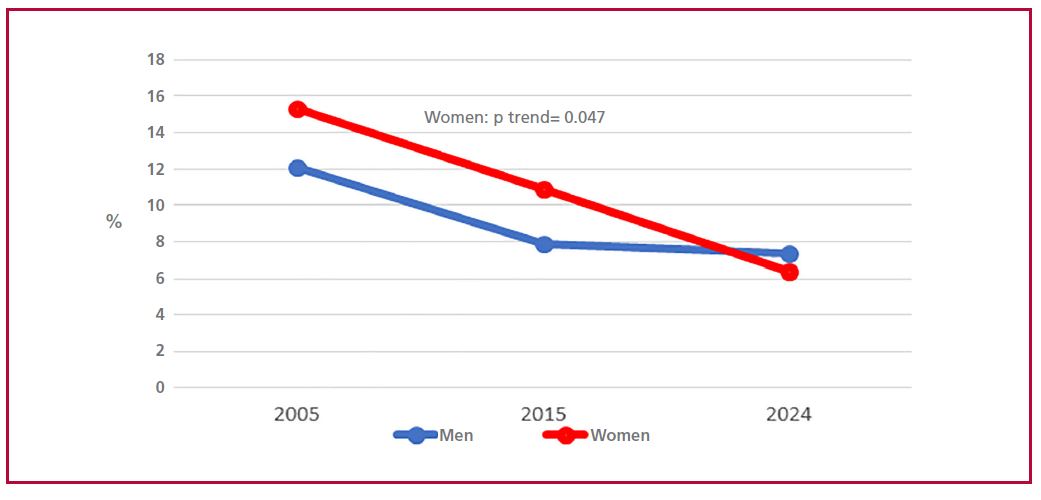
percutaneous coronary intervention procedures. In-hospital mortality decreased significantly among women (15.3%, 10.9%, and 6.4%; p trend = 0.047), comparable to that of men in the most recent period.
Conclusions: Over the past 20 years, women with STEMI in Argentina have shown significant changes in their clinical profile and therapeutic approach. There has been a substantial improvement in access to reperfusion therapy, along with a reduction in in-hospital mortality. These findings reflect advances in AMI care for women, although there are still challenges for preventing and managing risk factors.
Downloads
Published
Issue
Section
License
Copyright (c) 2026 Argentine Journal of Cardiology

This work is licensed under a Creative Commons Attribution-NonCommercial-ShareAlike 4.0 International License.