Clinical Presentation and Long-Term Outcomes of Severe Chronic Idiopathic Pericardial Effusions
pp 6-11
DOI:
https://doi.org/10.7775/rac.v75i1.2528Keywords:
pericardium pericarditis, pericardial effusionAbstract
Objectives
The aim of this study was to determine the frequency, clinical findings, diagnostic methods, treatment, outcome and the long-term prognosis of patients with severe chronic idiopathic pericardial effusion.
Methods
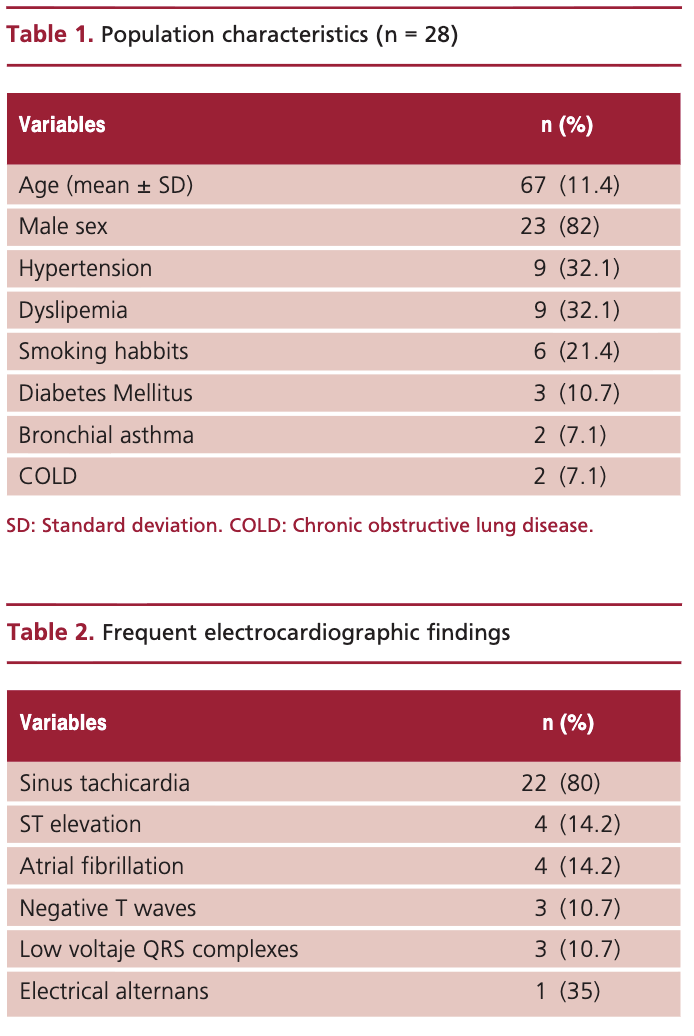
All patients with suspected severe pericardial effusion from 1992 to 2005 were prospectively analyzed following a pericardial disease protocol performed in our institution. Of a total of 152 patients, 54 had severe chronic pericardial effusion, 28 (52%) were finally diagnosed with idiopathic disease and were included in this study.
Results
The mean age was 67 ± 11 years, 82% men, 25 (89.3%) were symptomatic and presented dyspnea, 4 (16%) suffered cardiac tamponade and 10 (35.7%) showed echocardiographic signs of tamponade. The mean long term follow up was 60 months (3-128). The 3 asymptomatic patients were not undergone pericardial drainage and had a favourable outcome (mean follow up: 42
months). Twenty-five symptomatic patients were treated with pericardial drainage, 2 patients were lost to follow up, 14 (60.8%) did not have pericardial effusion, 3 (13%) had mild effusion, 2 (8.6%) had moderate effusion and 4 (17.2%) showed a new severe effusion. Three of them had dyspnea III-IV and required pericardiectomy and had a favourable outcome. The fourth patient remained asymptomatic.
Conclusions
Patients with severe chronic idiopathic pericardial effusion may be asymptomatic for a long time. Despite pericardial drainage is effective in the vast majority of symptomatic patients with pericardial effusion, relapsed can be occur and pericardiectomy is a good option for those patients.
Downloads
Published
Issue
Section
License
Copyright (c) 2026 Argentine Journal of Cardiology

This work is licensed under a Creative Commons Attribution-NonCommercial-ShareAlike 4.0 International License.