Heart Rate Contribution in Soccer Players during the Competition Period
pp 27-32
DOI:
https://doi.org/10.7775/rac.v77i1.2326Keywords:
Sports, Heart Rate, ErgometryAbstract
Objectives
To assess the performance of the components of the heart rate dynamic curve throughout baseline, exercise, and recovery period, according to the duration, the distance, and the intensity of treadmill and field aerobic tests , as an indicator of training and physical adaptation during the competition period in soccer players.
Material and Methods
A total of 108 male players from youth soccer, aged 17±2, were assessed with exercise stress test and aerobic field test, during the competiton period. A 2400 m treadmill test and a Yo-Yo Endurance Field Test, level 2, were performed.
Results
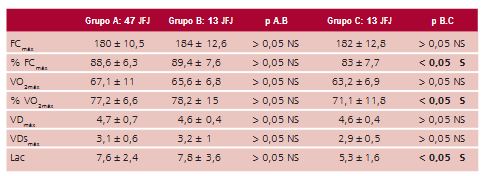
The continuous recording of the heart rate allowed for these data: 1) a more detailed register of the changes in submaximal heart rate (89.4±7.6 versus 83.0±7.7; p<0.05) on tread mill; 2) different subaximal heart rate responses in treadmill test and field test after the first minute (164.0 versus 116.6; p<0.05) and after the second minute (176.3 versus 123.5; p<0.05) in connection with the maximum heart rate (198.6 versus 194.0; p=ns); 3) during field testing, a greater interval of heart rate reserve in relation to the endurance capacity after the second minute (25.9 versus 19.1; p<0.05) was observed.
Conclusions
The regular comparison of these indices gives information related to immediate and extended adaptations of the physiological functions during the annual competition cycle in order to make a rationale plan of the training loads based on the results achieved, and to maintain the optimal performance Comparison of heart rate comparative records from soccer players during the competition cycle in aerobic exercise stress test and field test allows for the analysis of training and physical adaptation indicators. Indicators of baseline, submaximum, maximum, and recovery heart rate, as well as the interval of heart rate reserve, allow for information about performance and endurance training at different displacement speeds, resistance times and distances, in treadmill tests and field tests, which are very useful for the training guidelines during the competition period.
Downloads
Published
Issue
Section
License
Copyright (c) 2025 Argentine Journal of Cardiology

This work is licensed under a Creative Commons Attribution-NonCommercial-ShareAlike 4.0 International License.