
Aortic Valve Replacement in Octogenarian Patients: Perioperative Results and Mid-term Follow-up
pp. 13-20
DOI:
https://doi.org/10.7775/rac.es.v81.i1.1804Abstract
Introduction
Over the last decades the number of elderly patients requiring cardiac surgery due to degenerative aortic stenosis has consistently increased. However, this intervention is contraindicated in many of these patients due to their advanced age. To assess whether in our country this type of surgery is still a valid option, it is necessary to know the surgical results, complications and quality of life gained perceived by the patients, data which are scarce in the Argentine literature.
Objectives
The aim of this study was to communicate the experience of a center on aortic valve replacement in octogenarian patients and their mid-term follow-up.
Methods
From January 2005 to December 2010, 96 consecutive patients older than 80 years with degenerative severe aortic stenosis, underwent aortic valve replacement associated or not with coronary artery bypass grafting at the Hospital Universitario Fundación Favaloro. Retrospective morbidity and mortality data were compared between both populations. Follow-up to analyse quality of life was made through personal and telephone interviews.
Results
Mean age was 82±2 years and 54% were men. Exercise dyspnea was the most common symptom present in 84% of the study population. Eighty-four patients (77%) presented with some degree of previous renal dysfunction. According to the additive EuroSCORE, 78.1% of patients were at high and 17.7% at very high surgical risk. Isolated aortic valve replacement was performed in 55 patients (group I) and combined with coronary artery bypass grafting in the remaining 41 (group II). Overall 30-day mortality was 7.3%, 3.6% in group I and 12.2% in group II (ns). Taking into account elective surgeries, these percentages were reduced to 5.3%,
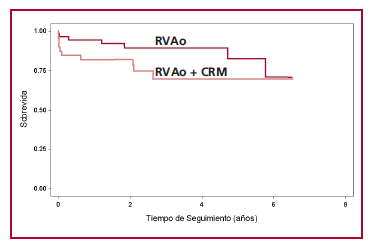
4.3% and 6.9%, respectively (ns). During the 6-year follow-up, cumulative mortality was 14%. At follow-up, 94% of patients were in FC I-II of the NYHA classification and 88% were not readmitted for a cardiovascular cause.
Conclusions
Aortic valve replacement in octogenarian patients combined or not with coronary artery bypass grafting is a procedure with good short and mid-term outcome when performed electively in an experienced center. Therefore, it should not be contraindicated considering only age or cardiac operative risk scores.
Downloads
Published
Issue
Section
License
Copyright (c) 2025 Argentine Journal of Cardiology

This work is licensed under a Creative Commons Attribution-NonCommercial-ShareAlike 4.0 International License.





