Evaluation of a New Diagnostic Algorithm for Acute Coronary Syndrome Using High-Sensitivity Troponin T Assay
pp 298-303
DOI:
https://doi.org/10.7775/rac.es.v82.i4.3650Keywords:
Acute Coronary Syndrome, Chest Pain Units, High, sensitivity Troponin TAbstract
Introduction: Chest pain represents 5 to 10% of annual visits to emergency departments. Its diagnosis is sometimes difficult, with the added problem of inappropriate discharge of patients with acute coronary syndrome or unnecessary hospitalizations. This has led to the development of different algorithms for the evaluation of these patients.
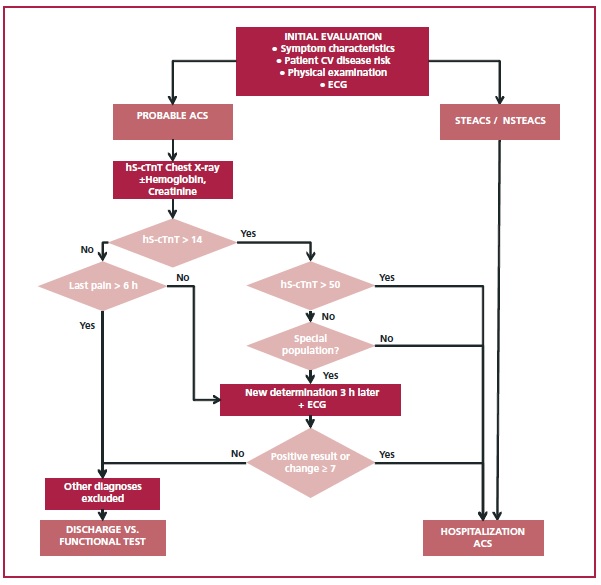
Objective: The aim of this study was to validate, in terms of safety and length of hospital stay, a novel algorithm incorporated in our center, which includes measurement of high-sensitivity troponin T in patients with suspected acute coronary
syndrome.
Methods: The study included 528 consecutive patients attending the emergency department with suspected acute coronary syndrome and evaluated according to the chest pain unit protocol. Clinical and laboratory variables and functional tests were analyzed. Follow-up at 30 days was performed in all the patients.
Results: After observation, 90.7% of the patients were discharged and 1.25% presented a cardiovascular event during followup,
represented by percutaneous coronary intervention and hospitalization due to acute coronary syndrome. The specificity of the global algorithm for the diagnosis of acute coronary syndrome was 97% with a negative predictive value of 99%. Emergency department length of stay was 4.5 ± 2.5 hours for all the patients.
Conclusion: The novel algorithm incorporated in our center with measurement of high-sensitivity troponin T in patients with suspected acute coronary syndrome has proved to be safe, as it prevents the discharge of patients with acute coronary syndrome and at the same time reduces emergency department length of stay.
Downloads
Published
Issue
Section
License
Copyright (c) 2025 Argentine Journal of Cardiology

This work is licensed under a Creative Commons Attribution-NonCommercial-ShareAlike 4.0 International License.